Reset Your Home For Summer Checklist
It’s officially Summer according to the calendar (even though it’s been hot here in North Texas for a while now). The focus has shifted to popsicles and hydration now more than ever! With the arrival of Summer comes necessary shifts in our life and home so we can cruise into this next season enjoying what it has to offer. Seasonal transitions are an inherently great time to slow down, reset your home, part ways with anything you don’t want to move forward with in your spaces, and gain clarity on what you’d like in greater focus moving forward.
Do a clothing check in.
1. Take a quick look in your drawers and clothing and remove anything that you KNOW you don’t plan to wear during this warm season. This would include things you avoided last Summer season, items that don’t fit, are uncomfortable, or items you no longer enjoy wearing. If you find anything that you still enjoy wearing that needs to be repaired or altered, put those items aside to repair on your own or take to a local tailor. Here’s our list of donation resources for clothing throughout the US and are often local to your area.
2. Move things around so it’s easier to get dressed during this warmer season. I’m a notorious’ organizing by color only person’ in my closet, but this season I was noticing that I was struggling to dressed easily once the heat started to crank outside, so I decided to move everything around. I grouped all my short sleeves, shorts, skirts, etc. together, organized them by color, then moved these ‘warm weather staples’ so they are the easiest to see in my closet. You can do something similar in your drawers with your warmer weather items. These visual cues focused on the current season for your clothing will help you get dressed with great easier.
3. Pay attention this seasons to items you’re avoiding OR wanting to wear more of. If you notice you’re avoid a particular pair of shorts, start asking questions. Are they uncomfortable? Do they need to be altered? Do they fit right? Are you not sure what to wear them with? Do you need to try them out with other tops or accessories to have more fun with it? Move things you want to wear in a spot that is easy to see. If you have a dress that you’re unsure you want to keep, wear it around the house for the day or on a day you’re running car errands (or quick errand into a store). See how you feel while you take it for a quick “test drive”. Try to mix things up and try out garments you’re not sure about with other things you’ve haven’t worn them. Intentionally shaking things up a bit will likely breathe new life into these pieces you’re unsure about. And if it’s not a match, you can be confident parting ways with these garments after you’d tested them out this season.
Do a food check in.
1. First take a breeze through your fridge and freezer. Look for anything you’re not going to eat, is expired or you simply don’t want anymore. Clean out and recycle and much as possible (please check locally for plastics they accept).
2. Next assess your pantry area. Whether you have an official pantry space or you like to store your room temperature snacks/dry goods/spices/baking ingredients in cabinets, out on a shelf or on top of the fridge, focus on removing anything that is expired, no one is eating or you no longer want to eat. If anything is unopened and not expired, check to see if your local food bank will accept it.
3. Organize and plan for the season. In any area holding food (fridge, freezer, pantry, cabinets, etc.) spend a few minutes group liking items so you’re not digging around all over for the same things. In any kitchen zones that you’re struggling to keep in order, give them a boundary (clear container, basket, tape line on the shelf) to give them a clear home. Label any area necessary so finding things and putting things is easy and intuitive for anyone in the home. Take note of anything you need to restock from your food decluttering session you just completed. Make your life easier with meal planning by creating a list of go-to Summer meals you can put on autopilot for the season. Try our weekly dinner planner notepad here or our Meal Planning Printable Bundle here that will help you plan out your meals with ease for months at a time!
Do a general home check in.
1. Walk the main areas of your home to look for anything out of season, and items that need to be removed or relocated. For example, the winter coats still on the hook in the entryway can be put away for the season. If you’d like to lighten the look in your living a bit, swap out blankets from other rooms to lighter ones during the Summer months. Swap out your kids artwork in frames to ones that feels lighter and brighter. Remove any unnecessary decor, pillows, nick nacks, etc. that make your space feel crowded and cluttered for donations. Recycle old magazines from past seasons. Recycle, file, shred, toss old mail/paper pile that’s been staring at you.
2. Look through your medicine cabinets and toiletries for expired products and items you need to restock. Come Summer, I always get caught off guard with all the products that are essential for our Summer, from bug sprays, aloe, skin care, sunscreens, lotions, etc. Check for expiration dates on all items each year. It’s also important to check in on your first aid kit status and restock on any essentials, including medicines. Check out our TOSS section for proper disposal of products, medicines and common expiration dates for many household items here.
3. Create spaces that encourage you to enjoy your Summer season and support any goals you have. How do we do this? Here’s a few ideas. If you want to read more this Summer, create a reading spot with your favorite books, great reading light, cozy blankets and a spot to put your feet up (you can do the same thing for your kids). If you want to focus on less screen time and more activities in the home, create a puzzle table or game area with card decks/board games so things highly visible and not tucked away. If you’d like to cook more with seasonal ingredients while they’re the freshest, display fresh products in a beautiful way in your kitchen and plan out some meals that highlight your seasonal food favorites (see our everyday meals planner and our meal ideas list maker here).
I hope these tips will help you take a quick look at your home with fresh eyes, lighten your load in your home, and help you focus on more of the things that you enjoy about this Summer season.
If you’d like MORE HELP decluttering, organizing and resetting your home this Summer, here’s a few great places to start.
Free Declutter Guide, Learn the basics of Decluttering, Schedule Decluttering Support, Donate Your Decluttered Items For Good Links SHOP all Declutter + Organize Guides/Courses
How To Know When To Declutter In Your Home: 5 Red Flags To Look For
Knowing when to declutter in your home can be confusing. Sometimes you’re just not sure if it’s time or if it’s worth your effort to do it right now. The benefits of decluttering are well known, yet it can still feel hard to carve out time to do it. Today we’re going to talk through 5 “red flags” (obvious indicators) that your space needs decluttering. If you notice one or more of any of these red flags going on in your home, you’ll know it’s time to take a moment and declutter that area. Keep this list handy so you can reference back to it often!
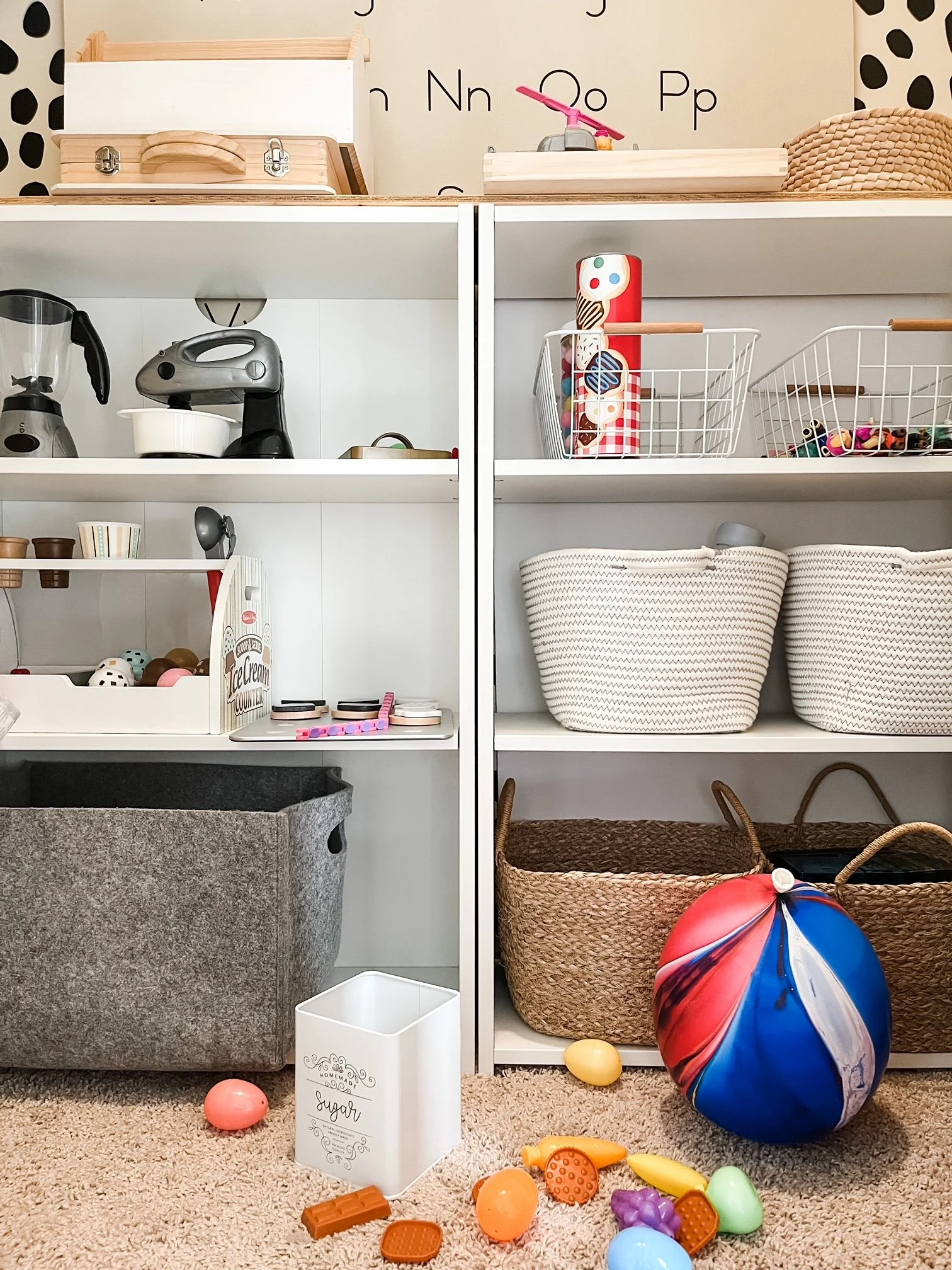
This is our front entry coat closet turned “play closet”. If I look in there + there’s stuff everywhere, it can definitely stress me out. But before I spiral, I do a quick reality check in. 1) Are my kids deep in play? If yes, leave it. 2) Can we add this to a reset time later or get their help with it? Yes. Carve out a few minutes later on to pick up that spot. 3) If I notice a consistent pattern of the kids not being able to pick up things, a light declutter might be needed because they’re trying to manage too much in that zone.
You look around + you can see/feel the clutter chaos.
Your space feels triggering for you and you can feel that it’s not working. It is creating unnecessary stress when you’re in the space or when you catch it in your sight lines. Even when we can’t quite put our finger on WHY a space is giving us anxiety, we know it needs our attention. I would say 9.5 times out of 10 reducing what is in the space to essentials is the key to resolving this.
You’re struggling to find things.
There’s a lot of looking and digging. You open up a drawer and you can’t find the kitchen utensils you need for a simple kitchen task. You can’t find the pen you always use to take notes with. Your kids are always losing shoes or their favorite toys. You can’t remember where you put that important note that came in the door last week. You can’t find what you thought you had in the pantry to get dinner started. You’ve given up several times looking for something you needed but just couldn’t find it and didn’t have the time to continue searching. This is a big one. It wastes so much of your time.
You see stuff collecting on your horizontal surfaces.
When you look around at counter tops, tops of tables, desks and furniture, you see a lot of stuff. I’m not talking about when the surface is actively in use (cooking a meal, kids creating artwork or doing homework at the table, etc.). I’m also not talking about simple gesture of joy in your home (fresh flowers, a bowl of a your favorite fruit out, etc.). These horizontal surfaces, if we aren’t diligent in carefully selecting what gets to stay out on them, things will inevitable collect on them. Think about each item out on a horizontal surface in your home, then look at each item carefully. Do you need it? If so, does it need to be out to be helpful/useful? Could it be tucked away? It is worth the space it is taking up this surface or would having more space be MORE helpful? Each item out on these horizontal surfaces, whether it is a counter top or the top of a piece of furniture, all grab for your attention. Too much attention grabbing and we become overstimulated and the attention fatigue easily creeps in without us realizing it. Do a quick horizontal surface “audit” anywhere in your home and feel free to thank me later!
You don’t have a plan for when things get put away.
Real reality, we life in our homes and we use things so stuff gets left out, causing lots of visual clutter. No problems there. The problem surfaces when we don’t have a plan for when we need a sweep through of spaces to put things away to clear this visual clutter. Some clutter is simply things that need to put away (like coats put back in a closer or toys back in their bin). Other clutter is excess because we are keeping things that we don’t actually use or need. When these two combine, it’s dangerous. We clutter up the things we actually need/use/love with things we don’t. That’s where things get messy, literally and figuratively. A plan to remedy this (aside from decluttering) is to put things away in small bits throughout the day, pick one time a day to do a quick round up to reset your home (yes, recruit help if you have it), or pick a few days a week to reset the spaces in your home.
This is a highly active landing spot in our home that can go from mass chaos to orderly in a snap, which is why I love it so much. We need to aim to create lots of these spaces in our home that can ebb + flow with our daily life. Some items get temporarily hung up or set on the bench + then put away later on when we can.
You put off addressing a cluttered zone because you think it will take a lot of time.
Truth, it will take some amount of effort to improve any area of your home, small or large. It will take some time to put things away and reset any space. But on the flip side of this, your brain is VERY GOOD at making things seem WAY WORSE than they actually are. The longer we delay things the more challenging and overwhelming we perceive them, when they likely haven’t changed much. If you’ve identified an area or a few in your home like this, not to worry. Pick any spot of your choice and use my timer method (5 to 20 minutes) and declutter this zone. The goal will be simply remove anything that doesn’t need to be there. Either relocate things that shouldn’t be there and are more useful in another location OR remove items that need to be donated/recycled/tossed. Keep only with is useful, helpful and valuable to you in that area and eliminate the rest. See what you can done in a short amount time. Put on some good music while you work. I can guarantee you’ll be blown away at what you can do in a small amount of time focusing on one small area.
If you find yourself identifying with one or more of these “red flags” in your home, just know that relief from the clutter chaos can happen by focusing on small areas in less time that you’d think. Your efforts will continue to give back to you daily but way of saved time, energy and mental bandwidth. Yes please!
Want to get this decluttering party started but aren’t sure where to go next? Here’s a few options for you to get you moving + motivated.
Free Declutter Guide, Learn the basics of Decluttering, Schedule Decluttering Support, Donate Your Decluttered Items For Good Links
How To Start Your New Year: 3 Easy Tips To Simplify Your Life + Home
Truth time. I hate the pressure of starting the New Year off “right” and I’m a natural born goal setter and go-getter. There’s pressure to have goals, set intentions, do more, be more, do better. I’d like to take a counterintuitive approach in sharing 3 tips with you that will reduce your overwhelm day to day and simplify your life and home. We are setting no goals here, just offering ways to simplify your life. Deal? Ok, let’s get started.
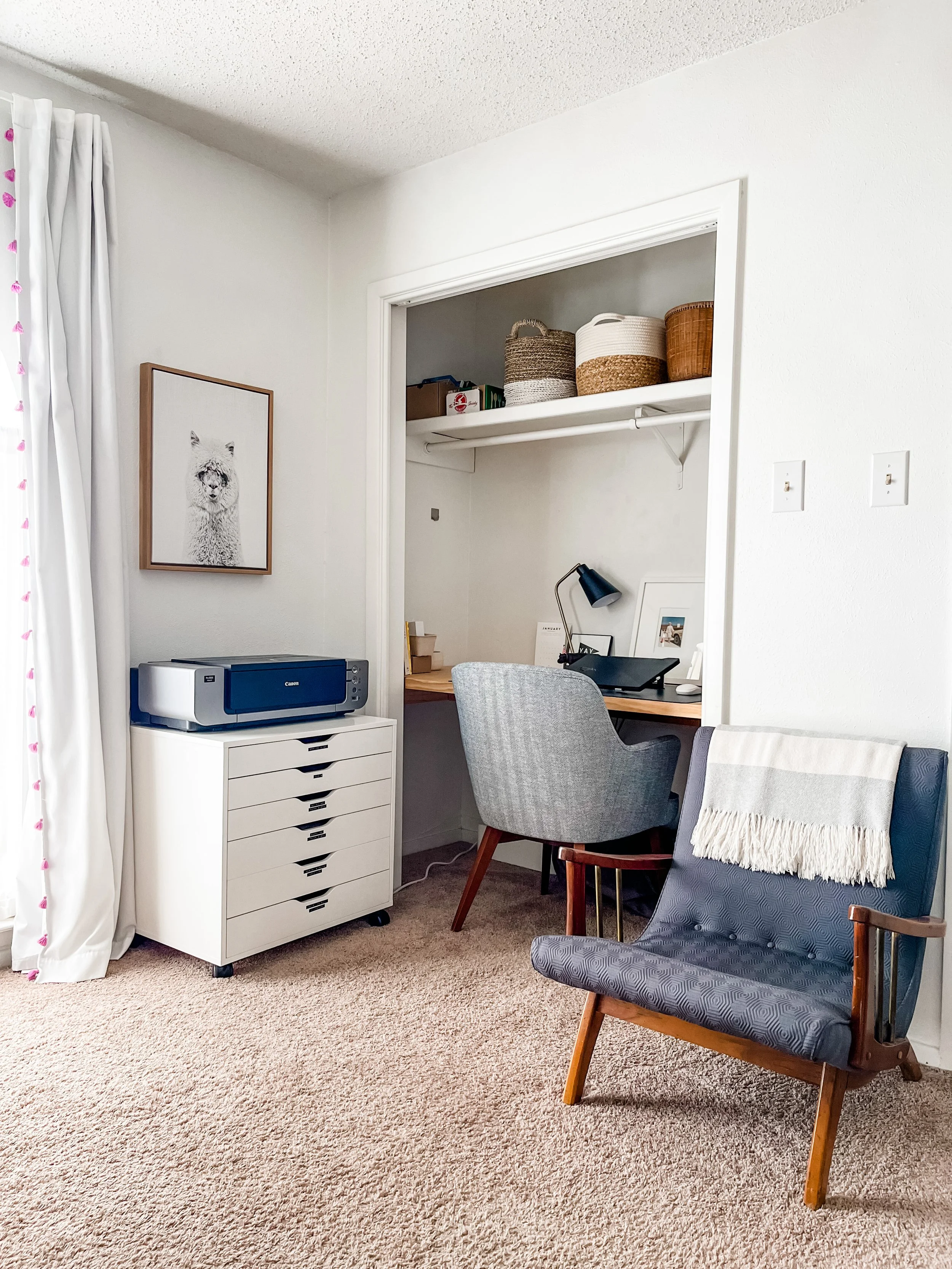
Creating peace in my office niche has both to do with how the physical space looks/feels + with what’s lurking in my email inbox. Both need + deserve attention to be maintained.
1. Unsubscribe to Emails
Now I want you to be ruthless in this email unsubscribe purge effort for 10-15 minutes. The plan is to start unsubscribing from emails you don’t read or doesn’t add value to your life.
Make it happen: Look for marketing emails to stores you don’t shop at, emails you never signed up for (it happens), blog or email subscriptions to content that no longer interest you. Also consider changing the frequency setting to once a month to stores/shops you love but don’t want to hear from them as often.
Benefits: You’ll scroll less and have less emails to manage. By creating more boundaries in your email inbox, the more time you’ll save and the less overwhelmed you’ll be by your inbox.
Bonus tip: Do this a few times a year to keep your inbox wrangled (I like to do it at the change of a season since it’s easy to remember) . Deleting unwanted emails is a separate effort. If you struggle with this, schedule a reoccurring appointment on your calendar once a week for a short burst of concentrated effort to simplify your inbox.
Having the beds made in the kids’ room is crucial so the room doesn’t feel incredibly small as a shared space. When the beds are made, they tend to put their clothes away quicker and keep the room cleaner overall to maintain the fresh feeling they walked into. Since my kids are still young, this is often a joint effort and modeling this skill is the first step.