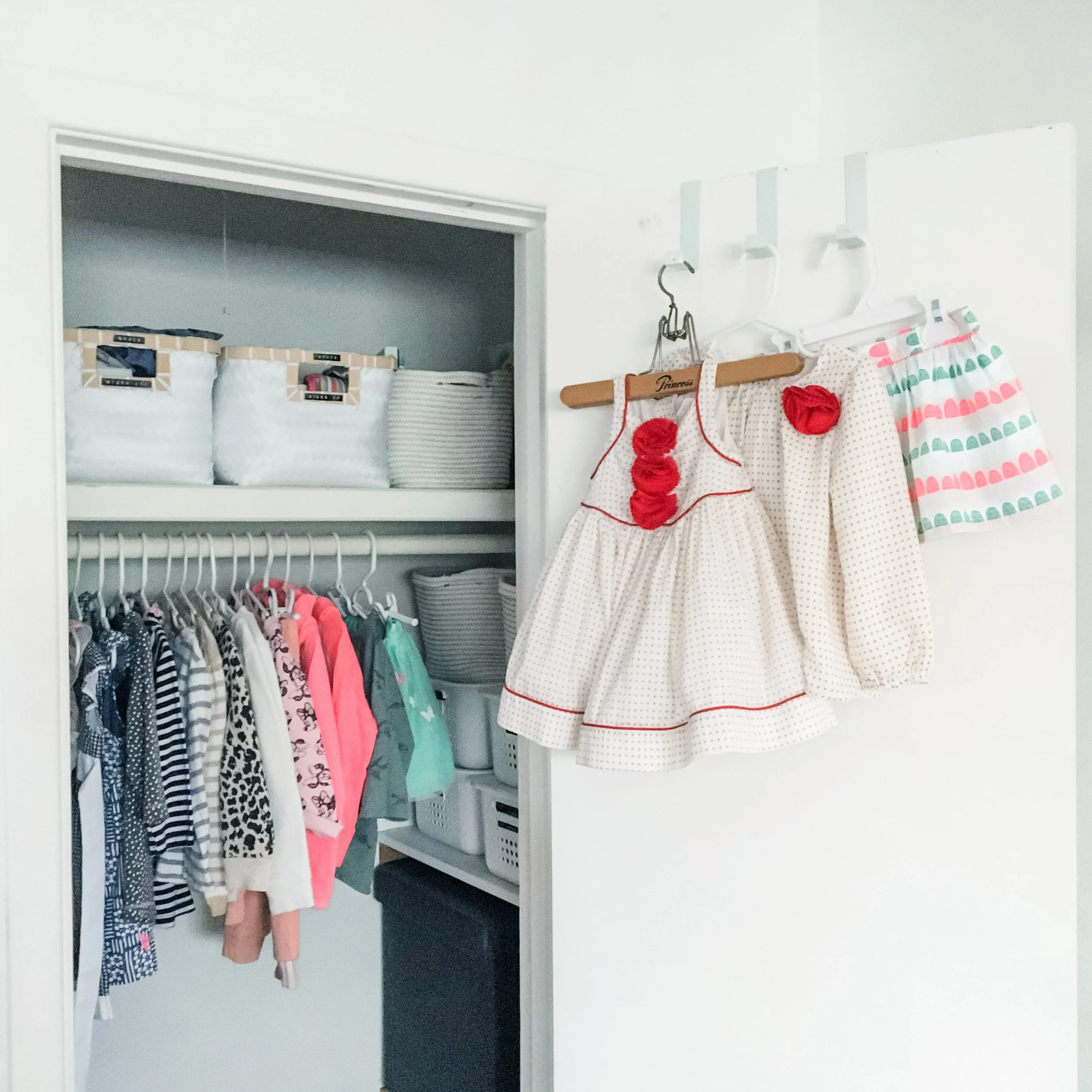
Decluttering Clothing With Your Kids Successfully: Focus On These 3 Things
If you’ve ever found yourself struggling to declutter clothing with your kids, you’re in the right place. As I write this, I’m thinking about reading several of the Junie B. Jones books in which she comments about getting into a “tussle” with her mom over things they’re not seeing eye to eye on. Based on many conversations I’ve had with our community here, family, friends and clients, this idea of a “tussle” often rings true when we think about corralling our kids to declutter clothing (or really anything) with us, the parents, the mamas, all of us!
If you’re interested in a different path where we mostly avoid these “tussles”…keep reading! We’ll focus on 3 key things to help you and your kids declutter clothing intentionally, without the overwhelm, with specific strategies that work.
1. MAKE THE PROCESS SMALL + SIMPLE.
What exactly do I mean by this? Here’s a few examples on how to do this.
go through clothing one category at a time - shoes, jackets, underwear, socks, t-shirts, dresses, etc.
review clothing one drawer at a time (not the entire credenza, unless you all have the steam for it)
pick a small zone of clothing to declutter, like one small section in the closet.
set a timer for 10 minutes and focus on one area, category or pile of items only.
have your kids pick a clothing category or 2 of their choice (like shoes and shorts for example).
make it into a game your kids can control to review clothing categories - have your kids write down categories of clothing that need to be gone through on a small piece of paper and toss them in a bowl (like jackets, bags, socks, t-shirts, etc.). Have them pick a category one at a time and take turns who gets to pick! Go through as many as you can and come back to the rest when you have time.
Bonus points and improved results when you combine some of these strategies! But keep it small, keep it simple, don’t look at the entire closet all at once and overwhelm your brain with too many decisions. Also, it never hurts to put on good music while you declutter together! Let your kids alternate being the DJ if you have more than one in the mix!
2. FOCUS ON WHAT YOU’RE SEEING THEM NOT WEAR TO DECLUTTER, NOT WHAT THEY ARE.
Too often I see families trying to dive into an entire dresser of clothing or an entire clothing closet to declutter, when in reality, over 50% (or more) is actively being worn, used and enjoyed - these do not need to be assessed. You can ignore all the frequently worn items completely! Check what’s in the dirty clothes basket after a few days…take note of what’s in there! This is what’s being worn in this current season!
Once I discovered this observation, it completely changed the way I declutter clothing (and honestly everything in my home) from that point on.
DO NOT FOCUS ON DECLUTTERING ITEMS YOUR KIDS ARE USING, WEARING AND ENJOYING (can you tell I’m passionate about this…I promise I’m not yelling)! There’s no point in spending energy on this!
Focus on the dresses they never wear, the boots sitting and collecting dust in their closet, the jacket they avoided all winter, the hair bows they aren’t into anymore.
And oh by the way, the reason why we must check back in on clothing monthly or seasonally (see more details on this below) is because what’s actively being worn (and what actually fits) changes over time. We must expect these shifts and expect to check back in on what’s being worn to better respond to our kids current needs, just like we do for our own needs.
Bonus points is to declutter using the first tip above, combined with the filter of ignoring anything they’re currently wearing and enjoying. Like this drawer below for example, skip over anything in a drawer you know they’re wearing and just focus on the items you notice them never pulling out to wear. Have them do this assessment with you. Ask things like “is there anything in this drawer you don’t love anymore” OR “is there anything in this drawer that feels uncomfortable so you don’t want to wear it”? These will help start productive conversations that will lead to simple decisions. Do not speak for your kids, be an active listener and ask questions to help them assess what they have without judgement. See my Parents + Kids Guide To Decluttering if you’d like more help and strategies communicating effectively with your kids while decluttering (including age specific strategies).
3. CREATE A LANDING SPOT FOR OUTGROWN CLOTHING.
You’ll want to do this as a family and everyone should know where it’s located in the home. It can be a tote bag in the hallway, a box on the floor in the coat closet, a basket in the garage, etc. Regardless of what you choose, make sure everyone knows where it is and what should go inside of it.
How to use this landing spot for clothing that needs to leave the house:
Show some examples to your kids of what might go in this landing spot - like shoes they have outgrown/are too tight / a shirt that is now too short on them or too tight on their shoulders, jeans that feel too tight and are no longer comfortable.
Allow clothing items they’ve fallen out of love to land here as well - just note that sometimes items that they’re simply not wearing anymore because they don’t enjoy it is a good enough reason to have it leave the home (even if it still fits). We want to have things around us that we enjoy and are being actively used (this is the ultimate goal). This can include accessories, bags, shoes, outerwear, anything they wear on their body can be removed as needed.
Check in on this spot once a month. Aim to donate/remove these items monthly (or more frequently) if possible. Ideally we chat with our kids about what they’ve outgrown or fallen out of love with to see what needs to be replaces (or not replaced - even more important). Reviewing what’s in this donation spot is an opportunity to discuss and connect with your kids on needs, wants and what they enjoy. Clothing items that are beyond donating, giving away or selling should go to textile recycling if possible. Check locally or use a company like Trashie to responsibly recycle textiles/worn out garments.
+ Beyond this, consider a monthly scan/check in on outgrown clothing (especially when your kids are growing at their quickest rate).
+ At a bare minimum, do a quick scan/decluttering burst with kids clothing (and all the things they wear) at seasonal transitions to lighten the load in your home and assess their needs.
+ SEASONAL TRANSITIONS throughout the year to help you anchor decluttering in your rhythms: Winter to Spring, Spring to Summer, Summer to Fall, Fall to Winter - so this results in a check in 4 times a year. This will keep the ship afloat in your home and help you avoid being buried by kids clothing that is no longer being worn/enjoyed!
+ If you’d like to dive deeper into decluttering with your kids, beyond kids clothing, I want to invite you to considering my Parents + Kids Guide to Decluttering. This is for parents and kids that want to learn how to lighten the load in their home, without the overwhelm, and free up time and space to live well together. It’s an absolute game changer for families…you have my sincere word.
WHAT TO DO NEXT:
+ Check out the KIDS STUFF zone for more free resources!
+ A game-changing resource for families: Parents + Kids Guide to Decluttering is a must for any family!!
+ See all KIDS focused resource throughout the website, from blog posts to helpful tools for your home.
+ Click the follow button for @fuzzyhipposhop_kids for more KIDS decluttering tips + basics to get you unstuck in your home on instagram!
+ Download my free declutter guide to get you taking quick + easy decluttering action in your own home (linked in profile).
Declutter Your Wardrobe + Accessories For Spring
Attention!!! I am NOT going to tell you to toss or donate the bulk of your wardrobe and start fresh for Spring! Nope! Instead we’re going to declutter your wardrobe and accessories for Spring from a lighter, more resourceful approach. Together we’ll walk through how to quickly edit your wardrobe and dress so it’s more effortless, some easy steps to make better sense of the closet space/drawers you have to store everything more efficiently, and become more resourceful with the clothing you already have. Are you in?! Good. Let’s get started.
I’ve discovered over the years that getting dressed is the easiest for me + my brain when my closet + drawers are organized by color. Take some time to figure out what organizational style works best for you so getting dressed feels as effortless as possible.
1. Clarify how you like to get dressed.
Probably not the first question you thought I was going to ask you! For example, I love getting dressed by color. 95% of the days throughout the year, color drives my initial choices of how I get dressed, followed by what the weather/activities for the day are steering. This might look a little different for you. Take some time to think through how you like to get dressed and what feels most intuitive for you. Is it pure function? Is it based on patterns you like to wear? Do you prefer to have a uniform of sorts (you love wide-legged trousers and a fun blouse for work most days)? It’s OK to have a combo of these on different days of the week or 2-3 primary ways you enjoy getting dressed. Get in tune with this so you can better organize your closet space to support what works best for you (see future steps).
Bonus Tips:
If you’re not quite sure about how to do this, I suggest you observe how you get dressed for the next week. What make getting dressed feel easy? What makes it feel challenging or frustrating? What order do you like to get dressed in with each garment? What color or colors do you gravitate towards? Did you always pull out extra layers to pair with basics? How do you dress differently on certain days or times of day? These are just a few different ways you can document how you naturally get dressed to help steer how you’ll edit and organize your closet/drawers in the next steps.
2. Do a light, strategic edit.
In this Spring wardrobe and accessories decluttering round, I only want you to focus on these 3 things:
Remove Spring/Summer items you haven’t worn in the last few years - including items you’ve fallen out of love with or have been avoiding for a while, don’t fit well or are uncomfortable
Remove items that don’t align with how you want to dress in your real day to day life (ie. the observations you uncovered in the step 1)
Remove accessories, outerwear, shoes, etc. that haven’t seen the light of day in years - if you do uncover something you forgot about that you love, let’s move it somewhere prominent so it can be enjoyed (see step 3)
Bonus Tips:
After you do this light edit, make sure to prepare items that can be resold or worn again for donations. Wash, clean, fold and organize items by type to help whoever receives your items get them in the right hands quickly. Donate items in recyclable paper bags, boxes or reusable bags to reduce waste during the process. Items beyond repair or can’t be resold can be sent for textile recycling. Check out more resources here.
3. Move things around to dress for the new season.
One of the bonus benefits of doing a wardrobe decluttering is a greater awareness of exactly what you own. Having this mental clarity is incredibly powerful! It helps you become more creative with what you already own and keeps you from running out to buy new pieces. Keep these next tips in mind while reorganizing your closet/drawers for this new season.
Group hanging items by how you like to get dressed (example by color, by garment type, by pattern, by occasion/activity, or a combo of any of these - use your insights from step 1)
Move things in a spot that you want to wear in a prominent place, like on a highly visible wall hook, in the front of the group of blouses, on the top or in the front of a folded stack - think about how a store would merchandise their goods for maximum beauty and visibility when highlighting these items
Clothing you’re keeping that’s for a different season/weather can move out of the prime real estate spots of your drawers and closet space (think back of drawers, up high, tucked away, in a container under the bed, in the back of the closet)
When folding shirts/pants/shorts/etc. group by colors that you enjoy most in that season and move other seasonal favorite colors (like for fall for example) towards the back if you don’t plan to wear them anytime soon
Bonus Tips:
Pay attention to items in your wardrobe you can wear through several seasons. These pieces should be easy to see and access at all times. They deserve prime real estate in your closet and drawers since they create the foundation of a versatile, flexible wardrobe.
Dressing for Spring is all about transitioning between cooler + warmer temperatures, often within the same day. I love pairing a classic black pair of joggers with a blouse or top that feels like Spring. I’ll layer it with a sweater, a scarf or hat to stay warm as needed. Above: One of my favorite lavender thifted tops I purchased from Third Sister Thrift.
4. Get creative + resourceful with what you have.
Instead of running out to buy new pieces this Spring, I want to challenge you to utilize the clothing and accessories you already have. Here’s my top tips for extending your wardrobe and reinventing what you have so it feels fresh and new (for free)!
Dress in layers - while the weather is likely still shifting from cooler temps to warmer, you can take a typical Fall/Winter top and add a “Spring friendly” cardigan, blazer or scarf to change the entire look while still staying warm (I love dresses or skirts layered with sweaters/sweatshirts to stay warm while there’s still a chill outside)
Utilize accessories - scarves, jewelry, hats, headbands, shoes, nail/lip color can all take a Winter look and completely transform it to feeling lighter and fresher for warmer weather
Shop your favorite stores for ideas - without buy anything, peruse the aisles or online collections for what’s new for spring and see what aligns with what you already have in your closet; I also like to check out the seasonal thrifted ideas from thredUP that are usually at the top of their homepage