DECLUTTER, DONATIONS, SIMPLIFY, TIME SAVERS Fuzzy Hippo Shop DECLUTTER, DONATIONS, SIMPLIFY, TIME SAVERS Fuzzy Hippo Shop

Declutter 100 Items in 30 Minutes Challenge - Part I

A few weeks ago, I was feeling overwhelmed in my home and was noticing random things for days on end that needed to be decluttered. I kept pushing them off saying I would come back to it on the weekend. With soccer, family time and gardening needs ramping back up, I kept forgetting to come back to it. So in the middle of the week, while my kids were at school and I was taking a break from my home and work to do list, I set the timer for 30 minutes to declutter. Today I’m sharing the process and the results.

A few weeks ago, I was feeling overwhelmed in my home and was noticing random things for days on end that needed to be decluttered. I kept pushing them off saying I would come back to it on the weekend. With soccer, family time and gardening needs ramping back up, I kept forgetting to come back to it. So in the middle of the week, while my kids were at school and I was taking a break from my home and work to do list, I set the timer for 30 minutes to declutter. Today I’m sharing the process and the results.
A bit more background on this - I spent my time in only a few zones in my home; this was not a full house effort. Because the timer being on for only 30 minutes, I had to merely scan for items I could easily declutter, without much thought. They had to be quick, easy decisions. The overall goal of this challenge is to get things out of the house I already knew needed to go, and maybe find a few treasures along the way!

Another tip - I did not spend time reorganizing things in the spots I was decluttering during the 30 minutes. I circled back after to tidy things up and reset / reorganize any spots that needed it. Focus on speed decluttering for those 30 minutes only. Reorganize if need later on.

Alright, well do you want to see the results?

TIP: Decluttering your every day bags are a great place to start to make quick, mindless decluttering decisions in a snap!

Reminder: This is not a full house declutter. This is what I call “hit the highlights in a few zones for 30 minutes” decluttering. Or you can focus on just one zone. It’s totally up to you! I had a few spots in mind that I knew needed my attention and that I could make quick decisions in, so those were priority for this quick decluttering session.

My favorite Time Timer to get set up.

Our ThredUp collection box for decluttered items.

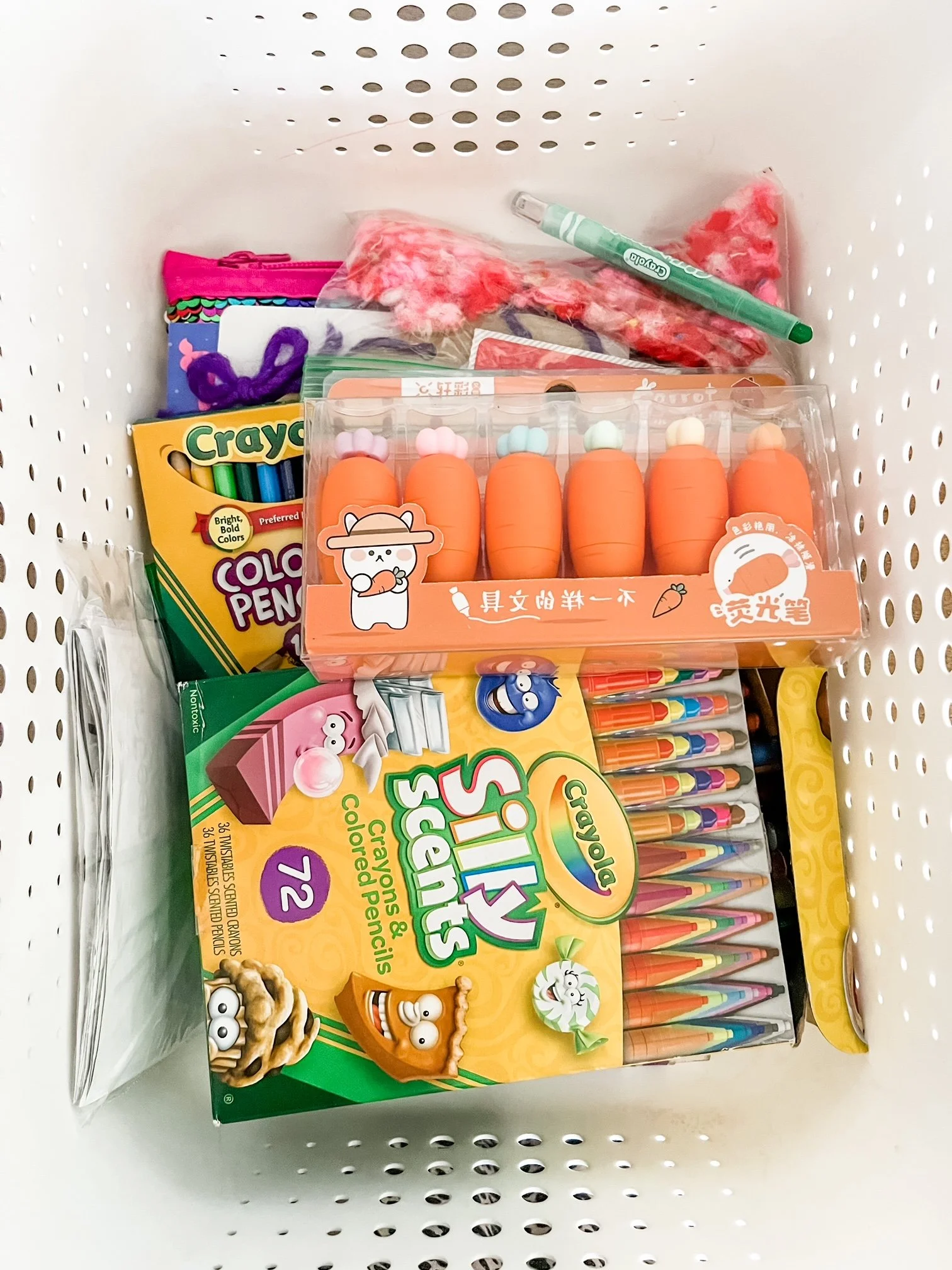
A peek in on our declutter box a few minutes in!

A hallway zone before I decluttered some decor.


What items to look for while you’re decluttering:

✔duplicates not in use ✔broken items ✔things no longer in use or outgrown ✔items and extra packaging/paper that can be recycled ✔items that are just trash ✔things in good shape but you’ve fallen out of love with to donate ✔collect items that need to be put away elsewhere in the house or given away/returned to someone ✔remove expired items like toiletries and food items (that’s as mindless of a decision as it gets!) ✔take note of wasted items that you won’t buy again or will buy less of in the future ✔take note of anything you run across that needs to be restocked

Categories to sort your items into as you declutter:

Donate (clean, in good shape, someone else can use the item)

Recycle (can be recycled in your area, check locally)

Textile Recycle (I do this separately with various companies like For Days or Ridwell might be in your area - check locally for other free options close to you)

Sell (for this round, it’s only books we’ll sell to Half Price Books)

Relocate (items removed from one area that you want to keep but need to go in another area of the house or given to someone/returned)

Trash (well, it’s just trash and it is the last resort if it doesn’t fall into any of the above categories)

You can have bags, boxes or baskets dedicated to each category as you go, or just throw everything in one bin (like in your laundry baskets for example) and sort things when you’re done. Use what you have and keep it simple!

Here’s the breakdown below of what I decluttered. After the 30 minutes, I sorted everything into categories then totaled them up.

✔Donate: 25

  • 3 oven mitts

  • 1 unscented candle

  • 2 over the door hooks

  • 1 kids tshirt

  • 3 vase/vessels

  • 1 glass cleaning

  • 1 drawstring bag

  • 1 bag Velcro pieces

  • 1 bag extra headphone ear covers

  • 3 key chains

  • 1 birthday necklace

  • 1 mini sewing case

  • 1 mystery cord

  • 15 hair new accessories

✔Sell: 8

  • 8 books (will take to half price)

✔Recycle: 32

  • 4 tea bag boxes

  • 1 Empty vitamin bottle

  • 12 paper towel/toilet paper rolls

  • 1 plastic yogurt container

  • 2 magazines

  • 1 cardboard box

  • 1 paper item

  • 1 plastic tray

  • 2 spice jars (clean out first)

  • 1 empty spray vitamin bottle

  • 6 random pieces of paper

✔Textile Recycle: 1

  • 1 old kitchen towel

✔Relocate: 12

  • 3 kids bracelets

  • 2 packs of seeds

  • 1 clip

  • 6 large shells

✔Trash: 61

  • 3 receipts

  • 34 tea bags

  • 1 bag sugar sprinkles

  • 1 empty super glue bottle

  • 19 plastic knives

  • 3 pieces random trash

✔Decluttering total: 139

_______________________________________

You can see the full break down of this Declutter Challenge, with short videos, more photos and details in my Challenge Highlight on the gram.

Check out our donation resources and more HERE.

See more Sell, Donate, Recycle + Toss Resources HERE

My donations from this round went to Leukemia of Texas Resale Center.

So what’s next?

Now it’s time for YOU to dive into your own (short burst of time) declutter challenge! Use whatever time you have, 10, 15, 20 minutes or 30 if you’d like, and see what you can do! This is how decluttering in real life actually works, when we can sprinkle it into our everyday, when we can, as time permits. But don’t obsess about the number of items leaving your home, just aim to remove things you know you no longer need, in as little time as possible (with as little mental effort as possible)!

I know I’ll be back with another round of this soon because my garage has been calling my name…see you then!

If you’d like MORE HELP decluttering + lightening the physical + mental load in your home, here’s a few great places to start.

Free Declutter Guide

Learn the basics of Decluttering

Parents + Kids Guide To Decluttering

No B.S. Guide To Decluttering

Declutter Your Home Masterclass

Work with Kristin

Read More
DECLUTTER, DONATIONS, SEASONAL Fuzzy Hippo Shop DECLUTTER, DONATIONS, SEASONAL Fuzzy Hippo Shop

Decluttering While You Prepare For The Holidays

I’m all about helping you (and myself) simplify the holidays. It’s a time that can often make you feel overrun by things to do and overrun by STUFF! It’s a time of giving and often receiving items that you don’t necessarily need or want. You need to have a plan for your home as you move into the holiday season to get control of what’s coming in, as well as what’s staying. Here’s 3 tips to help you declutter while you prepare for the holidays with ease.

1. Declutter as you decorate.

Of course, if decorating for the holidays is not your jam, you can feel free to skip this section. No sweat!

As you start pulling things out to shift your home to feel ready for the holiday season, I want you to take an objective look at each item you pull out.

Here’s some questions to ask yourself about each item:

  • Is the item in good shape?

  • Do I still like the item, is it still my taste?

  • Do I feel excited to pull this item out + see it in my home for potentially months on end?

  • Will this add more joy + not stress to my home while it’s out?

  • Is it worth the space it takes up to both store before the holidays + the space it takes up in my home while it is out during the holidays?

  • Do I still have the space to store this item when it’s not in use?

Now with these in mind, edit as you decorate for the holidays. Donate items locally in good shape that someone could joyfully use in their own home. You can also offer them to friends and family or put a free bin down at your curb (not on a trash day)! Also, aim to not bring in anything new to your holiday decor unless it is a 1 to 1 swap.


2. Declutter your outerwear.

Think jackets, coats, sweaters, gloves, scarves, boots and cold weather accessories. Most of us deal with some sort of seasonal weather change. Even if it’s not a big change (like my sister who lives in Miami), this is still a good time to check in on light jackets, raincoats, rain boots, etc.

What to ask yourself about your outerwear:

  • Does it fit properly?

  • Am I comfortable in it?

  • Do I look forward to wearing it?

  • How practical is it to wear + do I actually wear it?

  • Does the piece pair well with the season of life I’m in?

  • Does it need to be set aside for repair or alterations?

For items that are in good shape that you’d like to part with, consider local groups who have people in need of these essentials/basics for the temperature changes. I drive by a church close to my home that puts out a coat rack during the colder months where you can drop off a coat or pick one up if you’re in need. I LOVE this idea. ‘Coats for Kids’ might be in your area (another great one). You can find more donation resources and ideas here:

Donate Decluttered Goods + Donate / Recycle / Sell / Toss


3. Declutter the extras.

I know this sounds vague but I’m going to get this clarified and dialed in for you quickly. I am talking about all the things making your home and life feel heavy, especially around the holidays. They need to go.

Here’s some examples things you can remove now:

  • Outgrown toys, books + clothing.

  • Extra decor around your home that you no longer enjoy (look room by room - think art, pillows, blankets, knick knacks, items given to you don’t use or like)

  • Items covering your fridge (edit to as minimal items as possible).

  • Things that you’re holding onto that have a negative memory or association with them.

  • Countertop clutter (items that need to be relocated, tossed, recycled, or simply put away).

  • Emails cluttering up your inbox (take a few minutes to unsubscribe from marketing emails from people/places/business you no longer want to hear from).

Aside from these tangible and digital areas to declutter in your home, it’s important to address old ideas, thought patterns or traditions that don’t suit your current season of life (this is a mental decluttering strategy - remove thinking causing stress/overwhelm unnecessarily, create helpful/healthy routines that will bring joy and value to your home, life and the people around you). I really like the approach on this post on decluttering your mind and keeping it that way by Simple Home | Simple Life blog.

Decluttering before and during the holidays will help everyone in the home clarify what’s most important, gain clarity on what all is actually in the home, and have clear direction on any needs/wants to communicate with others around you who want to gift something to you. Be sure to ask and listen to others on their needs as well so you aren’t adding clutter to someone else’s holiday. I hope you’ll find these decluttering tips helpful as you prepare for the holidays and move into this new season.

If you’d like MORE HELP decluttering and resetting your home, here’s a few great places to start.

No B.S. Guide To Decluttering Parents + Kids Guide To Decluttering

Free Declutter Guide Learn the basics of Decluttering Organizing Basics

Shop all Declutter + Organize Guides/Products

Read More
DECLUTTER, DONATIONS, MOM LIFE, MOTHERHOOD, ORGANIZE, SEASONAL Fuzzy Hippo Shop DECLUTTER, DONATIONS, MOM LIFE, MOTHERHOOD, ORGANIZE, SEASONAL Fuzzy Hippo Shop

How To Declutter All The Kids Stuff at the End of the School Year

It’s no secret that when school is out (and in the weeks leading up to it) your home can be inundated with papers, artwork, supplies, and random objects far beyond what your home can handle. Today we’re going to break down each category of kids’ school clutter, how to declutter them, then what to do with what you want to keep. And yes, we’re going to discuss how to work with your kids to get them involved in the process so it’s not all on your shoulders! Yep, I’ve got you!

School Papers + School Work.

EDIT: Go through any school papers that came home with your child or have them go through it on their own. My now 8-year-old does this completely on her own. I like to quickly glance through the stack before to scan what’s been going on in her world, then I let her take over the process. Take a few minutes to marvel with them in the stories they wrote, the assignments that were particularly challenging, or things they enjoyed the most. If it feels daunting, set a timer for 10 minutes to keep things moving.

RECYCLE: Anything that doesn’t want to be kept and is paper-based without tape or glue can be recycled.

KEEP: If there are papers you or your child wants to keep, assign them to a folder for a while (ie. give it a clear boundary with a home your child can manage). Revisit this folder in a few months to see if these keep items still need to be kept (often they are ready to part with them sooner than you’d think).

Kids Artwork.

EDIT: Go through the art pieces with your kids or have them go through it on their own. I love having them tell me about their favorites and how each was created. Pull aside the favorites they want to keep and set aside the ones they’re ready to move on from.

RECYCLE: Art made from tapeless origami or watercolors, crayons, colored pencils, and/or markers on paper can all be recycled when no longer wanted. If a piece of artwork has paint, stickers, glue, googly eyes, glitter, popsicle sticks and feathers, it should go in the trash. Are there plastic pieces? Foam stickers? These are all things that cannot be recycled, and shouldn't be placed in the recycling bin even if they are attached to paper or cardboard. See addition kids art recycle and toss tips HERE.

KEEP: Artwork that your child wants to keep can be saved in a few ways. 1) Displayed in the home in frames or pinned up in any way you choose. We rotate out artwork each season or every few months n frames on an art ledge. 2). Have a keep folder (like the papers) to save for a while and revisit later. 3) Make it into something else, like a card for a friend’s birthday or gift wrap for a grandparent. 4) Take digital photos of their favorite art pieces and create a printed photo books each school year, semester, or whatever timeframe works best for you. I love how Holly Blakey creates art books for her kids using this technique. Alison Mazurek also has the best space saving suggestions related to kids artwork and saving here. I hope to get more diligent with this in our own home, so I’ll keep you posted on my progress soon!


School Supplies.

EDIT: Before you start chunking things in the trash, look at all that has come home with the filter of “could we use this again next year or someone else?” Over the last several years, we’ve been able to reuse several things from year to year. From backpacks, lunch bags, notebooks, plastic folders, dividers, to pencil cases, crayons, colored pencils, pencils, some unused notebooks, pens, erasers, etc. All the sudden your bill for school supplies next year doesn’t seem so high!

RECYCLE: Extra paper boxes and bulky packaging that’s no longer needed can be recycled so they don’t take up as much space. Reuse or donate anything in good shape that is no longer needed or you have duplicates of, from books, to writing utensils, extra paper, notebooks, rulers, etc. Full notebooks that have been used up as journals or for notes can be recycled if they are without tapes, glues, stickers, etc. These extras can also be offered up to local schools and charities to support teachers and students with school supplies needs. Check out all my donation links under schools and teachers here for more ideas.

KEEP: If you have school supplies you anticipate using again for next year, I would encourage you to pull them aside in a bag or container and label it. One of my age old tricks is to remove any permanent marker from notebooks and plastic folders with a damp Mr. Clean Magic Eraser. If you’re trying to remove any labels or stickers on most plastics or non-paper surfaces, it will easily come off with some drops of lemon oil rubbed on it for a few minutes. Wipe the area clean with water and dry off completely once the label or sticker has been removed.

Random Toys + Misc Objects.

EDIT: Before you start editing, talk together with your kids about where these fun “extras” are going to live in your home. Give them a clear boundary or two so they have a home for the toys/extras so can be easily returned there. Pull everything out onto a table or flat surface to go through it. Identify what’s trash, recycle, donate and keep items. Discuss limiting duplicates, things that broken or no longer loved. With a clean boundary (like a basket or a drawer) it will be clear how much can be kept moving forward.

RECYCLE: Paper-based items, cards, boxes, notes, etc. can make their way to recycling if they’re not longer being kept. Check on what plastics your area accepts locally. Consider toys in good shape that could be given away/donated/sold and pull those aside for donations. If it is a cheap plastic toy that will break in two seconds, it’s best to send it directly into the trash. You can also offer up a box of toys or kids decor freebies to a local Buy Nothing Group or share to your area on Freecycle for others to enjoy.

KEEP: With the newly establish boundary for your child’s random keep items, help them organize what they have and discuss how to filter what comes into your home in the future. For example, group items by sizes and how it is used/by type for example. Ask them questions about what they enjoy playing with or what they enjoy having around the most to help them focus on what they should allow into the home in the future. This editing and organizing process will also give them clarity on what they already own. Discuss that once this “boundary” is full or feeling disorganized (they’re digging around, can’t find things or the drawer won’t shut for example) it’s a red flag to take some time to go through and edit what’s in there. They can ask for your help or go through it on their own. Practice over time will make this process easier and smoother, promise!

Are there any other kids “school clutter” that I missed or you want me to talk more about? Make sure to drop it down below in the comments. Now tell me, have you tamed the school clutter yet in your home this summer? Tell me everything in the comments below!

Want to get this decluttering party with your kids + need more help getting started? Here’s a few options for you to get you moving + motivated.

Parents + Kids Guide to Decluttering

The biggest game changer to make decluttering in your home with a family less chaotic + more peaceful!

Free Declutter Guide, Learn the basics of Decluttering, Schedule Decluttering Support, Donate Your Decluttered Items For Good Links

Read More
DECLUTTER, GIVING + GIFTING, TIME SAVERS, DONATIONS Fuzzy Hippo Shop DECLUTTER, GIVING + GIFTING, TIME SAVERS, DONATIONS Fuzzy Hippo Shop

Decluttering For Good: How To Start + Make An Impact On The World Around You

I’ve done a lot of coaching and supportive counseling to clients, friends and family over the years about decluttering in their home. Within all those conversations, there’s two common trains of thought I’ve observed that keep you stuck. One, that you have no time to declutter. Two, that you’re not sure where to start, causing lots of overwhelm, guilt and stress. Today we’re going to walk through a few simple ways to start decluttering and align your items you’re parting with to do good in the community around you.

Start Small.

This is my number one recommendation when you are decluttering in your home, whether you’re a newbie or you’re feeling seasoned with the concept. It’s the skill I teach in all of my masterclasses, guides and courses, the act of breaking things down into small, actionable steps (or mini tasks).

Here’s a few ways you can complete small decluttering tasks in your home in small chunks of time.

  • Grab a box or bag and walk your home or focus on one small area to declutter. Fill the box or complete that area and be done!

  • Focus on one category of items to declutter - books, shorts, writing utensils, spatulas, shoes. Put your blinders on with everything else and just focus on that one category and complete it.

  • Declutter one micro zone - one drawer, one shelf, one counter top, one seating area, one wall, one piece of furniture. Edit and eliminate items you no longer use, find value it or enjoy and keep the rest.

Schedule Your Donations.

I absolutely LOVE scheduling a donation pick up. I’d say this is one of the best tools I share with my clients, family and friends for getting decluttering done in my own home that will work for you too. It gets a hard date on the calendar to focus on, it lights a fire under you and gets you motivated to take action, it has a deadline (or an ending so to speak), and people are relying on you to keep your word. I love it and it works every time! Also note, do the best you can within the time frame you have. You may not get to everything and that is OK. You can schedule another pick up at another time when it makes sense for you. I love to schedule a pick up a week or two out so I have time to go through things and get everything organized for the pick up.

In recent months I’ve schedule donation pick ups with Salvation Army and Leukemia Texas. Also check out this article on charities that offer pick up services. See more donation resources below at the end of this post and always check locally in your area for what’s available around you.

A few tips to make your life easier and easier on the wonderful people who will pick up your items and do good with them:

  • Donate your items in something reusable or recyclable to reduce waste and trash during the process (paper bags, cardboard boxes or reusable or sellable containers/baskets/bags).

  • Organize your items by how your donation pick up service requests/categories your items, like clothing bags, household goods, kids toys, etc. I like to further sort items like clothing into adult and kid categories when relevant. This often reduces how many containers/boxes/bags you need for the donations because everything is grouped with like items that are often like shapes.

  • Make sure you follow the instructions of the donation service for pick up. Have your items out, organized and out/protected from the elements so it’s easy for the truck to pick up and move on to their next location.

Align your donated items to do good for others.

Often times the one thing missing to motivate us to complete decluttering tasks in our home is a greater purpose. For example, if you know that decluttering in your closet is going to help women who can’t afford a new wardrobe for job interviews that are trying to get back on their feet with Dress For Success, aren’t you going to be more willing to see it through? Or that taking the time to declutter toys and books with your kids you’ll be able to offer items to donate to a cause like My Stuff Bags Foundation who offer support, comfort and goods to children displaced from their home.

There are so many ways to align your decluttering efforts and items with good all around your community and beyond. Check out our newly revamped donation resources here for more ideas.

Now’s your turn. What is a favorite donation spot you love to share your decluttered home goods too? I’m so excited to continue building our donations resources to serve our community!

How can I help? Want more support decluttering in your home?

Free Declutter Guide

Learn the basics of Decluttering

Declutter Your Home Masterclass

Schedule Decluttering Support

Read More