DECLUTTER, MOTHERHOOD, MOM LIFE, ORGANIZE Fuzzy Hippo Shop DECLUTTER, MOTHERHOOD, MOM LIFE, ORGANIZE Fuzzy Hippo Shop

Decluttering Toys In Your Home: A Blueprint

If you’re like the average parent, at least once a day (or 10) we think about kids toys, regardless of the age of the kids. Are they still playing with that? Why does that have so many pieces? Why do they like that thing? Why don’t they play with this? Where in the world are we going to store this? Why did someone give this to my kid? Why is this left out again? Does any of that sound familiar?

Instead of worrying so much about what and our kids may or may not like/play with a toy, we’re going to learn concrete skills to declutter any toys, at any time, while bringing them along for the ride to learn together.

If decluttering toys in your home has felt impossible, overwhelming or just plain confusing, the goal is to take all that away in this blog post. We’ll give you the foundation on how to get started below, and if you want to take it a step further, you can checkout my Parents + Kids Guide To Decluttering!

1. AVOID OVERWHELM BY PICKING A STRATEGY TO MAKE TOY DECLUTTERING FEEL ‘SMALL’.

Instead of getting overwhelmed thinking of ALL the toys in your home + how to declutter them all at one time, make the process feel smaller/more manageable with one of these approaches:

+ Consider a single category to focus on. Games. Building. STEM toys. Stuffed animals. Small toys. Large toys (just a few examples). There’s a lot of ways to slice + dice this but the end goal is to make the process feel ‘small’ + focus your energy on a single group of things rather than everything at once.

+ Pick one toy zone to focus on. A toy drawer or collection. One closet. One shelf. One basket. One bin. One wall of the toy room. Keep hyper focused on assessing one zone, then move on to the next when you can. Declutter toys only in this zone.

+ Set a timer for 10-15 minutes. Pick an area, room or zone to focus on + let the timer guide your process while you declutter. Once the time is up, if you’d like to keep going, feel free to! If you aren’t able to continue, do another short burst of time later when you can.


2. TIPS TO HELP YOU DECLUTTER TOYS QUICKLY.

Now that you’ve decided on an approach to make the process more doable, here’s a strategic list of things to consider/look out for to start pairing down the toys in your home as you’re decluttering.

START WITH TOYS THAT ARE EASY TO PART WITH:

+ Discard broken, beyond repair toys. I would also include cheap, plastic toys in the category from parties (you know exactly what I’m talking about) that break easily /aren’t being actively played with (TOSS). Recycle parts/pieces/packaging whenever possible. Check locally.

+ Donate duplicate toys in good shape (unless both are actively being used). Example: We were recently given a dice game we already had. We donated one of the games.

+ Donate toys that your child active avoids or opening says they don’t like anymore. You can open a conversation about it with your kids by saying: ‘I’ve noticed a few things you aren’t playing with anymore, what are your thoughts about it? Can we donate it + free up more space for other things?’ If something is still up for debate, move the toy/game/etc. in an easy to access location for a period of time you both agree on (1 month for example), then donate if it hasn’t been played with after that time.

GENERAL TIPS FOR ASSESSING ANY TOY IN YOUR HOME:

+ Is the toy actively being used/enjoy frequently? (KEEP)

+ Has your child developmentally outgrown the toy / engage with it less + less? (DONATE, OR save for a younger sibling if you have the space to do so.)

+ Is there a similar toy that your child plays with a lot more? Example: You have 2 similar magnetic tile building sets, only 1 is used when both are out. (DONATE the lesser used one OR try a toy rotation, keeping only 1 out at a time. If one is avoided, it’s now time to DONATE it.)

+ Is it a 90/10 or open ended toy? This means the child has to do 90% of the work for it to be played with, 10% is the toy itself. This toy can be reinvented, redesigned + reused in endless ways. In general, toys with screens, lights, sounds + talks to your kid are not 90/10 toys. Examples of a 90/10 toys include: building blocks, beads, pom poms, a ball, cups/bowls, a marble run kit. (DONATE or limit the number of toys in your home doing all the work for your kids - it will reduce boredom + boost their creativity. Focus on keeping mostly open ended toys in your home.)

+ Are you limited on space in your home / there’s larger toys that your kids don’t enjoy much anymore? Remember that open space to move, create + breathe in are the best things we can offer our kids to foster more play. (DONATE the big, bulky toys that are rarely used eating up valuable space in your home).

See even more tips + strategies inside my Parents + Kids Guide To Decluttering.


3. AFTER YOU’VE PAIRED DOWN YOUR TOYS, MAKE SURE THEY ALL HAVE AN INTENTIONAL HOME.

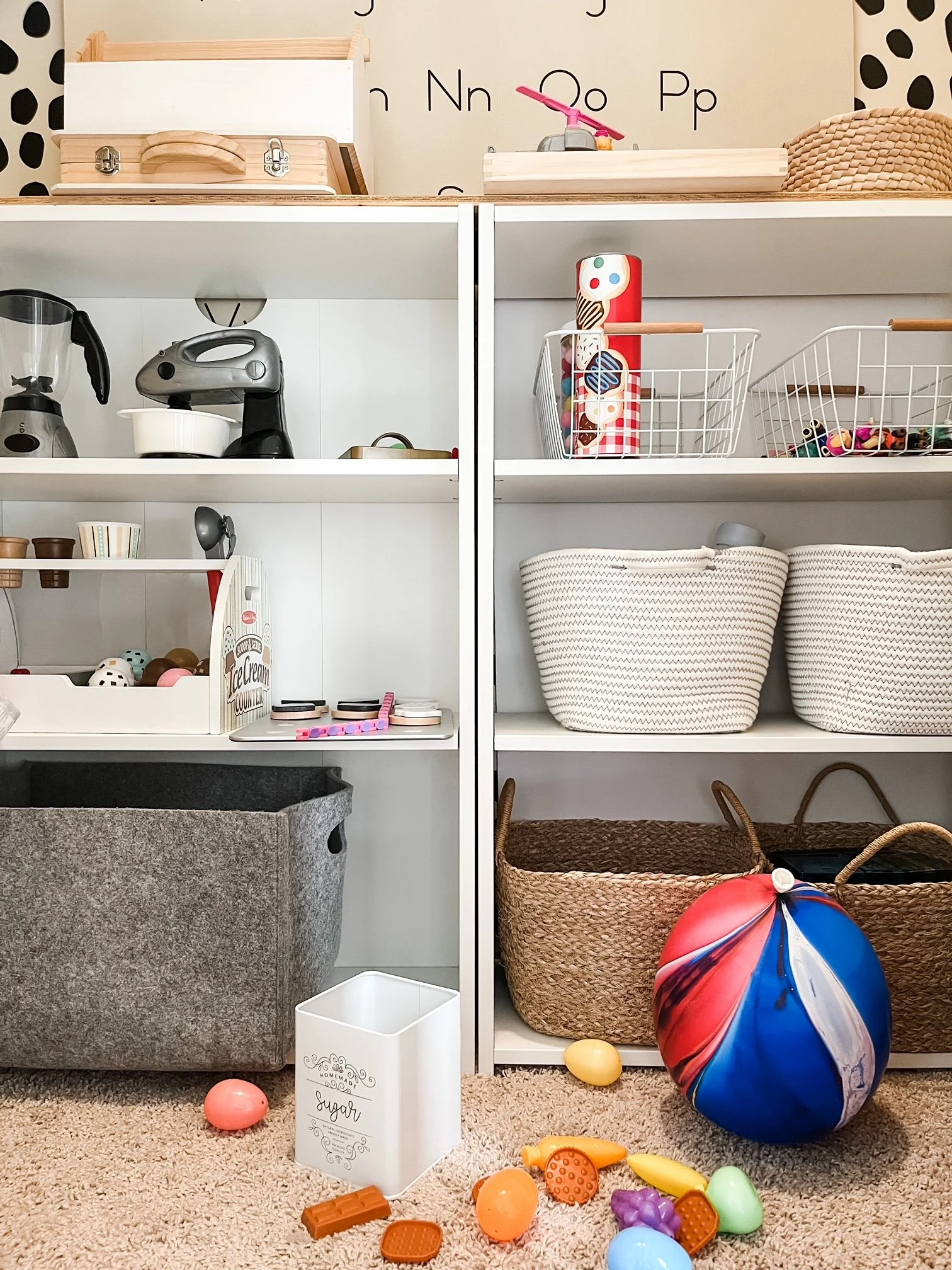
Maximize the space you have + make ‘play’ more accessible, foster more creativity with your kids, reduce overstimulation + encourage longer, independent play with these strategies:

+ Limit what you have out for your kids to play with, especially 7 + under. Sensory overestimation is at a peak during these ages, so having less out at a time will engage them in more creative play + foster more independence. Children with sensory sensitivities will require additional boundaries per that child. But to recap, no matter the age, less out is always best.

+ Rotate toys around every few weeks if you have the space to do so. If you don’t have space for this, simply rearranging toys in the space you have, swapping bins or displaying things differently one morning can create a similar effect of things feeling new + interesting! You can also consider a toy swap with a fellow mama every few months to refresh your toy stash! I love this idea!

+ Make toys easy to get to / easy to put away. Any toys that need guidance or supervision should be up high/not easily accessible. Model to your kids where things are + where you put them when you’re done playing with them. Model for them how to take care of what they have in their home.

+ Let messes happen. Pick your moments to reset your play spaces + encourage your kids to take charge of this effort. Join in for a bit with some good music on + then let them take over. Remember, the less you own, the less there is to manage + put away!


Now it’s your turn to go try these tips out to help you start getting unstuck with toys in your home, so you can start taking decluttering action in small bursts!! You’ve got this!!


Want more insights on how to talk with your children, tailored to their age, to get them involved with decluttering toys (+ all their things) in your home? You’ll learn all of these tools + more inside my Parents + Kids Guide to Decluttering!


WHAT TO DO NEXT:

+ Download my free declutter guide to get you taking quick + easy decluttering action in your own home (linked in profile).

+ Click the follow button for @fuzzyhipposhop to follow along for more decluttering tips + basics to get you unstuck in your home on instagram!

+ Check out the KIDS STUFF zone for more free resources!

+ A game-changing resource for families: Parents + Kids Guide to Decluttering is a must for any family!!

Sending you + your family lots of fun + less chaos in 2025!!

Please drop any comments + questions below. I’d love to here from you! // Kristin

Read More
DECLUTTER, DONATIONS, MOM LIFE, MOTHERHOOD, ORGANIZE, SEASONAL Fuzzy Hippo Shop DECLUTTER, DONATIONS, MOM LIFE, MOTHERHOOD, ORGANIZE, SEASONAL Fuzzy Hippo Shop

How To Declutter All The Kids Stuff at the End of the School Year

It’s no secret that when school is out (and in the weeks leading up to it) your home can be inundated with papers, artwork, supplies, and random objects far beyond what your home can handle. Today we’re going to break down each category of kids’ school clutter, how to declutter them, then what to do with what you want to keep. And yes, we’re going to discuss how to work with your kids to get them involved in the process so it’s not all on your shoulders! Yep, I’ve got you!

School Papers + School Work.

EDIT: Go through any school papers that came home with your child or have them go through it on their own. My now 8-year-old does this completely on her own. I like to quickly glance through the stack before to scan what’s been going on in her world, then I let her take over the process. Take a few minutes to marvel with them in the stories they wrote, the assignments that were particularly challenging, or things they enjoyed the most. If it feels daunting, set a timer for 10 minutes to keep things moving.

RECYCLE: Anything that doesn’t want to be kept and is paper-based without tape or glue can be recycled.

KEEP: If there are papers you or your child wants to keep, assign them to a folder for a while (ie. give it a clear boundary with a home your child can manage). Revisit this folder in a few months to see if these keep items still need to be kept (often they are ready to part with them sooner than you’d think).

Kids Artwork.

EDIT: Go through the art pieces with your kids or have them go through it on their own. I love having them tell me about their favorites and how each was created. Pull aside the favorites they want to keep and set aside the ones they’re ready to move on from.

RECYCLE: Art made from tapeless origami or watercolors, crayons, colored pencils, and/or markers on paper can all be recycled when no longer wanted. If a piece of artwork has paint, stickers, glue, googly eyes, glitter, popsicle sticks and feathers, it should go in the trash. Are there plastic pieces? Foam stickers? These are all things that cannot be recycled, and shouldn't be placed in the recycling bin even if they are attached to paper or cardboard. See addition kids art recycle and toss tips HERE.

KEEP: Artwork that your child wants to keep can be saved in a few ways. 1) Displayed in the home in frames or pinned up in any way you choose. We rotate out artwork each season or every few months n frames on an art ledge. 2). Have a keep folder (like the papers) to save for a while and revisit later. 3) Make it into something else, like a card for a friend’s birthday or gift wrap for a grandparent. 4) Take digital photos of their favorite art pieces and create a printed photo books each school year, semester, or whatever timeframe works best for you. I love how Holly Blakey creates art books for her kids using this technique. Alison Mazurek also has the best space saving suggestions related to kids artwork and saving here. I hope to get more diligent with this in our own home, so I’ll keep you posted on my progress soon!


School Supplies.

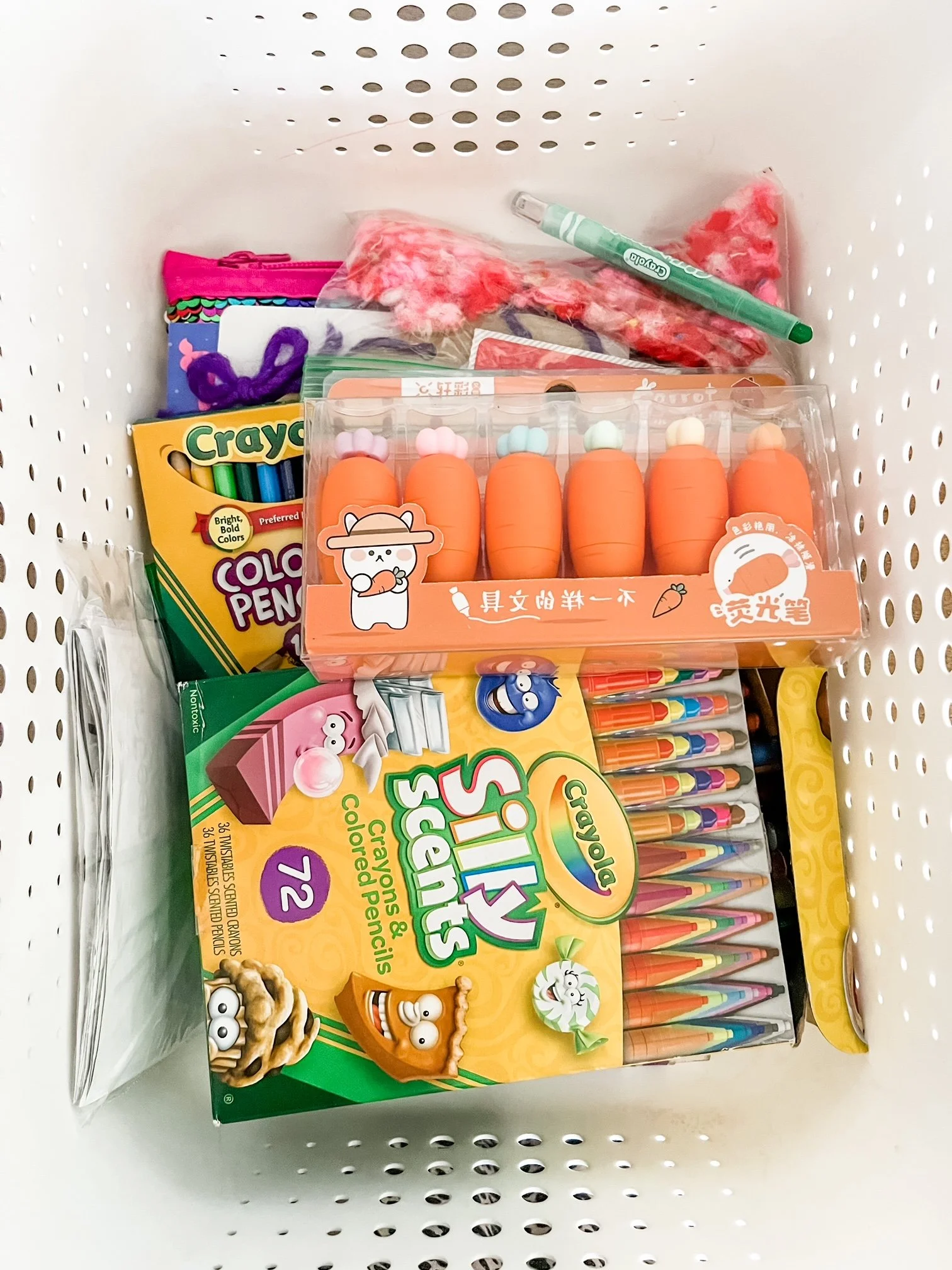
EDIT: Before you start chunking things in the trash, look at all that has come home with the filter of “could we use this again next year or someone else?” Over the last several years, we’ve been able to reuse several things from year to year. From backpacks, lunch bags, notebooks, plastic folders, dividers, to pencil cases, crayons, colored pencils, pencils, some unused notebooks, pens, erasers, etc. All the sudden your bill for school supplies next year doesn’t seem so high!

RECYCLE: Extra paper boxes and bulky packaging that’s no longer needed can be recycled so they don’t take up as much space. Reuse or donate anything in good shape that is no longer needed or you have duplicates of, from books, to writing utensils, extra paper, notebooks, rulers, etc. Full notebooks that have been used up as journals or for notes can be recycled if they are without tapes, glues, stickers, etc. These extras can also be offered up to local schools and charities to support teachers and students with school supplies needs. Check out all my donation links under schools and teachers here for more ideas.

KEEP: If you have school supplies you anticipate using again for next year, I would encourage you to pull them aside in a bag or container and label it. One of my age old tricks is to remove any permanent marker from notebooks and plastic folders with a damp Mr. Clean Magic Eraser. If you’re trying to remove any labels or stickers on most plastics or non-paper surfaces, it will easily come off with some drops of lemon oil rubbed on it for a few minutes. Wipe the area clean with water and dry off completely once the label or sticker has been removed.

Random Toys + Misc Objects.

EDIT: Before you start editing, talk together with your kids about where these fun “extras” are going to live in your home. Give them a clear boundary or two so they have a home for the toys/extras so can be easily returned there. Pull everything out onto a table or flat surface to go through it. Identify what’s trash, recycle, donate and keep items. Discuss limiting duplicates, things that broken or no longer loved. With a clean boundary (like a basket or a drawer) it will be clear how much can be kept moving forward.

RECYCLE: Paper-based items, cards, boxes, notes, etc. can make their way to recycling if they’re not longer being kept. Check on what plastics your area accepts locally. Consider toys in good shape that could be given away/donated/sold and pull those aside for donations. If it is a cheap plastic toy that will break in two seconds, it’s best to send it directly into the trash. You can also offer up a box of toys or kids decor freebies to a local Buy Nothing Group or share to your area on Freecycle for others to enjoy.

KEEP: With the newly establish boundary for your child’s random keep items, help them organize what they have and discuss how to filter what comes into your home in the future. For example, group items by sizes and how it is used/by type for example. Ask them questions about what they enjoy playing with or what they enjoy having around the most to help them focus on what they should allow into the home in the future. This editing and organizing process will also give them clarity on what they already own. Discuss that once this “boundary” is full or feeling disorganized (they’re digging around, can’t find things or the drawer won’t shut for example) it’s a red flag to take some time to go through and edit what’s in there. They can ask for your help or go through it on their own. Practice over time will make this process easier and smoother, promise!

Are there any other kids “school clutter” that I missed or you want me to talk more about? Make sure to drop it down below in the comments. Now tell me, have you tamed the school clutter yet in your home this summer? Tell me everything in the comments below!

Want to get this decluttering party with your kids + need more help getting started? Here’s a few options for you to get you moving + motivated.

Parents + Kids Guide to Decluttering

The biggest game changer to make decluttering in your home with a family less chaotic + more peaceful!

Free Declutter Guide, Learn the basics of Decluttering, Schedule Decluttering Support, Donate Your Decluttered Items For Good Links

Read More
DECLUTTER, TIME SAVERS Fuzzy Hippo Shop DECLUTTER, TIME SAVERS Fuzzy Hippo Shop

How To Know When To Declutter In Your Home: 5 Red Flags To Look For

Knowing when to declutter in your home can be confusing. Sometimes you’re just not sure if it’s time or if it’s worth your effort to do it right now. The benefits of decluttering are well known, yet it can still feel hard to carve out time to do it. Today we’re going to talk through 5 “red flags” (obvious indicators) that your space needs decluttering. If you notice one or more of any of these red flags going on in your home, you’ll know it’s time to take a moment and declutter that area. Keep this list handy so you can reference back to it often!

This is our front entry coat closet turned “play closet”. If I look in there + there’s stuff everywhere, it can definitely stress me out. But before I spiral, I do a quick reality check in. 1) Are my kids deep in play? If yes, leave it. 2) Can we add this to a reset time later or get their help with it? Yes. Carve out a few minutes later on to pick up that spot. 3) If I notice a consistent pattern of the kids not being able to pick up things, a light declutter might be needed because they’re trying to manage too much in that zone.

You look around + you can see/feel the clutter chaos.

Your space feels triggering for you and you can feel that it’s not working. It is creating unnecessary stress when you’re in the space or when you catch it in your sight lines. Even when we can’t quite put our finger on WHY a space is giving us anxiety, we know it needs our attention. I would say 9.5 times out of 10 reducing what is in the space to essentials is the key to resolving this.

You’re struggling to find things.

There’s a lot of looking and digging. You open up a drawer and you can’t find the kitchen utensils you need for a simple kitchen task. You can’t find the pen you always use to take notes with. Your kids are always losing shoes or their favorite toys. You can’t remember where you put that important note that came in the door last week. You can’t find what you thought you had in the pantry to get dinner started. You’ve given up several times looking for something you needed but just couldn’t find it and didn’t have the time to continue searching. This is a big one. It wastes so much of your time.

You see stuff collecting on your horizontal surfaces.

When you look around at counter tops, tops of tables, desks and furniture, you see a lot of stuff. I’m not talking about when the surface is actively in use (cooking a meal, kids creating artwork or doing homework at the table, etc.). I’m also not talking about simple gesture of joy in your home (fresh flowers, a bowl of a your favorite fruit out, etc.). These horizontal surfaces, if we aren’t diligent in carefully selecting what gets to stay out on them, things will inevitable collect on them. Think about each item out on a horizontal surface in your home, then look at each item carefully. Do you need it? If so, does it need to be out to be helpful/useful? Could it be tucked away? It is worth the space it is taking up this surface or would having more space be MORE helpful? Each item out on these horizontal surfaces, whether it is a counter top or the top of a piece of furniture, all grab for your attention. Too much attention grabbing and we become overstimulated and the attention fatigue easily creeps in without us realizing it. Do a quick horizontal surface “audit” anywhere in your home and feel free to thank me later!


You don’t have a plan for when things get put away.

Real reality, we life in our homes and we use things so stuff gets left out, causing lots of visual clutter. No problems there. The problem surfaces when we don’t have a plan for when we need a sweep through of spaces to put things away to clear this visual clutter. Some clutter is simply things that need to put away (like coats put back in a closer or toys back in their bin). Other clutter is excess because we are keeping things that we don’t actually use or need. When these two combine, it’s dangerous. We clutter up the things we actually need/use/love with things we don’t. That’s where things get messy, literally and figuratively. A plan to remedy this (aside from decluttering) is to put things away in small bits throughout the day, pick one time a day to do a quick round up to reset your home (yes, recruit help if you have it), or pick a few days a week to reset the spaces in your home.

This is a highly active landing spot in our home that can go from mass chaos to orderly in a snap, which is why I love it so much. We need to aim to create lots of these spaces in our home that can ebb + flow with our daily life. Some items get temporarily hung up or set on the bench + then put away later on when we can.

You put off addressing a cluttered zone because you think it will take a lot of time.

Truth, it will take some amount of effort to improve any area of your home, small or large. It will take some time to put things away and reset any space. But on the flip side of this, your brain is VERY GOOD at making things seem WAY WORSE than they actually are. The longer we delay things the more challenging and overwhelming we perceive them, when they likely haven’t changed much. If you’ve identified an area or a few in your home like this, not to worry. Pick any spot of your choice and use my timer method (5 to 20 minutes) and declutter this zone. The goal will be simply remove anything that doesn’t need to be there. Either relocate things that shouldn’t be there and are more useful in another location OR remove items that need to be donated/recycled/tossed. Keep only with is useful, helpful and valuable to you in that area and eliminate the rest. See what you can done in a short amount time. Put on some good music while you work. I can guarantee you’ll be blown away at what you can do in a small amount of time focusing on one small area.

If you find yourself identifying with one or more of these “red flags” in your home, just know that relief from the clutter chaos can happen by focusing on small areas in less time that you’d think. Your efforts will continue to give back to you daily but way of saved time, energy and mental bandwidth. Yes please!


Want to get this decluttering party started but aren’t sure where to go next? Here’s a few options for you to get you moving + motivated.

Free Declutter Guide, Learn the basics of Decluttering, Schedule Decluttering Support, Donate Your Decluttered Items For Good Links

Read More
DECLUTTER, DESIGN, MOM LIFE, MOTHERHOOD Fuzzy Hippo Shop DECLUTTER, DESIGN, MOM LIFE, MOTHERHOOD Fuzzy Hippo Shop

How Architecture School Prepared Me For Motherhood

I had no clue when I was in architecture school (decades ago) how much of my day to day would translate directly into my life as a mother. Did it prepare me for everything? Of course not. Nothing can prepare you for motherhood, and I mean this in the best possible way. I could never have fathomed the ride I was about to take and the joys I would experience having children. I hope you’ll join me (regardless of your seasons of life right now) and delight in this group of life lessons that originally surfaced in architecture school, and has since resurfaced in my first 8 years of my motherhood journey. And if you’re not in the throws of motherhood, not to worry. Many of these ideas will be fitting for your life as well, regardless of your current life season/focus, so stick with us!

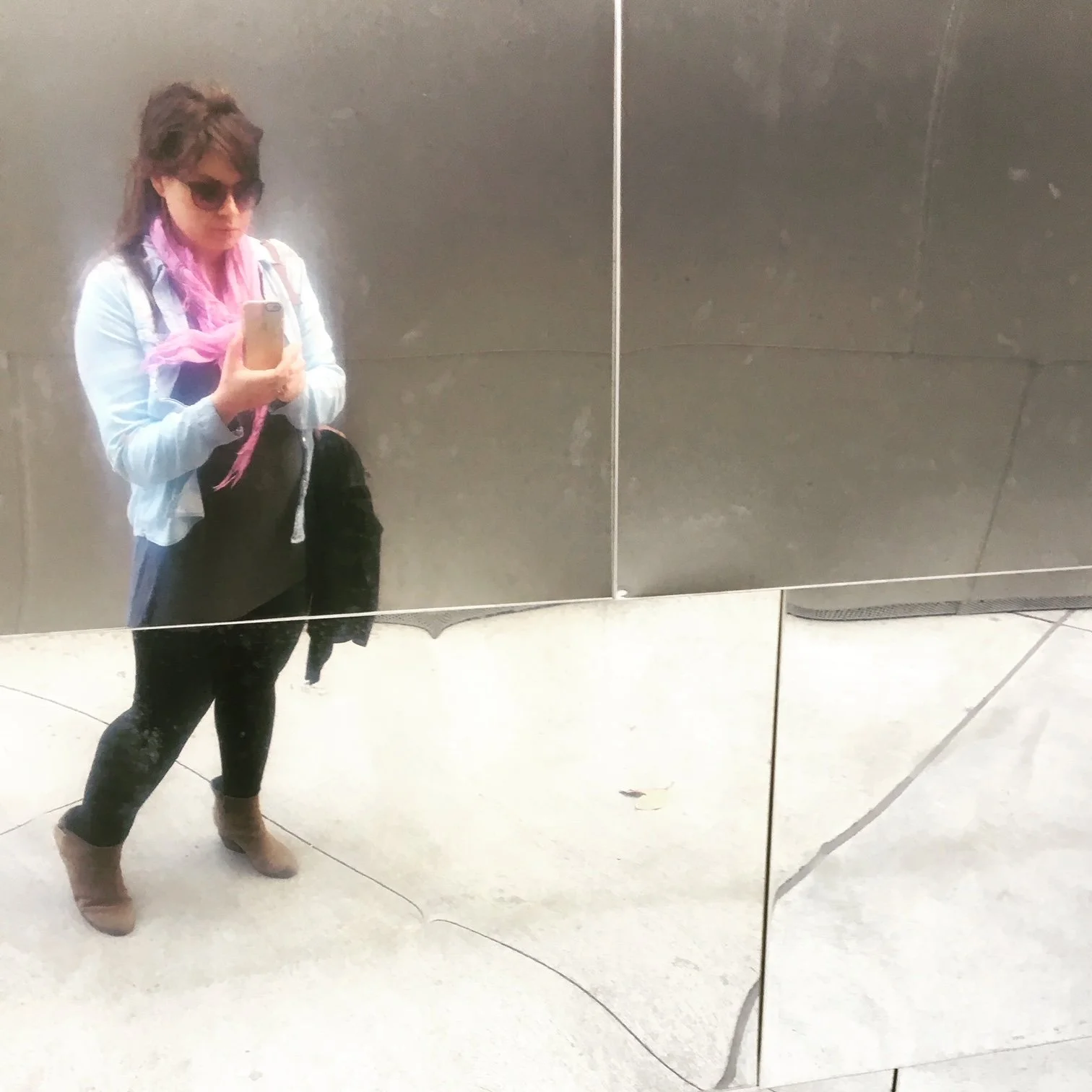
Me in literal reflection at Frank Gehry’s Walt Disney Concert Hall in LA. Here I was at the end of my 1st trimester with my second child + it was the first time I had ever traveled alone away from my toddler.

Your sleep will be compromised (at least for a bit).

Architecture School Perspective: During architecture school, pulling all-nighters happened frequently towards the end of big studio projects/deadlines. The sleep was poor, you felt like a zombie, and somehow things were getting done, even though it was hard to remember a lot of it. Note: I’m not recommending that you do this, in fact I got much wiser in graduate school and barely had any all-nighters and the results were much better both in my health and in my project quality! Your design studio projects feel a lot like a growing baby that you’re nurturing and paying continuous, acute attention to. Ironically at the terminus of the project, while you feel like you’ve birthed something profound, you simultaneously then must send it (your design project) out into the world for judgment and scrutiny. This now hits home.

Motherhood Perspective: The needs are high. The feedings and care demands of a baby are HIGH, resulting is less and choppy sleep. Duty calls. You have to step up and get the job done, whether you have help around or not. The jacked up sleep demands while caring for babies and young children last far longer than any project deadline in school. And I got to stop caring for that “baby” AKA “studio project” after my design presentation. I got to walk away from it. Not so much in motherhood. Which leads my to our next topic of needing breaks…

You need to take breaks often.

Architecture School Perspective: If I could tell the former architecture student version of myself one thing, it would be to take more breaks. Your brain and your body need breaks to reset. Your creativity/cognitive function greatly improves after you step away from what you’re focusing on, look at new things/surroundings and then return back. You think you don’t have the time and that your project is going to suffer if you walk away for any amount of time. So many problems and design issues were often resolved after I’d step away, take a break and come back later when my brain had a break.

Motherhood Perspective: This is 100% true as well in motherhood, even though it feels hard to take breaks for so many reasons, unnecessary guilt being one of them. You feel guilty because you think you’re needed all the time (which is often true) but even in these extremely needy phases with children, you cannot ignore your need for taking a break from care-giving. Sometimes taking a break is not by formally leaving the house, but by stepping outside, doing something completely different than caring for others, like water coloring or making yourself a fancy coffee. These all count. Asking for help from others counts. Sitting in silence/quiet for 5 minutes counts. These all help you reset. They are needed. They are essential. You have to intentionally take them or your body will force a break on you by way of sickness or mental health struggles.

Delight in as many details as possible.

Architecture School Perspective: The details that create “good” environments in architecture, interiors and in all design are layered and vast. The details add up to make the entire design and ignoring some results in “holes” in the project. Glaring areas that were missed opportunities where it looked like you forgot it was even there. Every studio professor will find those “holes” by the way. And odds are you already knew they were there. The details of how a user interacts with a space are critical and define the quality of user experience on a small and large scale. The details are everything.

Motherhood Perspective: Your world shrinks down rapidly to LOTS of details as a mother. It becomes ever so apparent in moments when your baby picks up the one hair ball you missed sweeping and you have to finger swipe it out of their mouth so they don’t choke. It is clear just how much the details matter. One thing I learned when my kids were very young (and even now) is how little I noticed before they were around. Our adult brain likes to gloss over the details of the day. And all those details, if we choose to engage with them and delight in them make for a pretty great day and existence. Ignore the details and the day becomes quite dull, colorless and bland. But please note: you will NOT be able to delight in ALL the details. Some are not pleasant at all and still need your attention. They are not in fact enjoyable, at all, and that’s OK.

Connect before you critique.

Architecture School Perspective: I was always so grateful for the studio professors that took the time to understand where I was at with my project, to meet me right where I was in the design process and offer support. To learn the direction I was trying to go, where my hang ups were, what decisions I was trying to make, and how I was planning to “tell the story” of my design concept. If they ignored this step, it was difficult for them to offer genuine mentorship for my project goals. Ignore the design student’s design goals and you ignore their process and offer advice that makes it your own, not theirs.

Motherhood Perspective: Meeting my children exactly where they’re at on a daily basis has completely changed my perspective on parenting. Telling myself “their story” and “where are they right this moment” helps better direct me on how I can offer support or stay on the sidelines until I’m needed. If I assert myself too much, their story becomes mine. Their learning journey becomes skewed. Their developmental timeline becomes someone else’s, not their own. I’ve learned to give breathing room while remaining close, even though it’s not always easy to do so.

Always question: does it need to be here or not?

Architecture School Perspective: I had a professor in graduate school that requested that we ask this question, “does it need to be here or not” throughout every design project. It became one of the most impactful things anyone ever said to me in design school (and down the road as it relates to my entire life). He would asks us to look closely at all the elements of our project, whether it was a building, an interior, a product, then go through each part and cover one element up. Then ask yourself, is it better or worse? Is the design lacking if it isn’t there? Is it better if it’s not there? I have used this assessment tool in all my designs since then and still do in my business, in graphic design projects and in designing spaces in my own home. And guess what, IT WORKS!

Motherhood Perspective: In motherhood, many times, there’s too much and everything seems important. A lot of needs are happening at one time. The list of “must-dos” seems long and endless. I have found over the years that when I actually sit down to assess this list, many things are truly not needed. They can wait or can be removed completely. They don’t need to happen right now. I’ve also applied this idea to the spaces in my own home, particularly with my children. Rooms that have felt stressful and overwhelming had too much in them. They needed to be intentionally decluttered. Things had to assessed and some items slowly removed to make way more living. It’s been a reminder that the greatest gift I can give my kids is space to move, explore and create in. Not by adding in more things, just open space. In times of overwhelm, I ask myself “does it need to be here?” Or “is this essential for the livelihood of myself, my family or my children?” Many times the answer is “no.” Sometimes it is “yes.” But learning to not only edit our physical space and how we use our time is life giving and life saving.

You’ll learn more simply by doing.

Architecture School Perspective: One thing I learned early on was that ZERO of my projects got better or more evolved if I just stared at them. I had to get over the uncomfortable phase of not having any or all of the answers upfront and just start somewhere. I had to move past the fear of doing things wrong, otherwise I would simply stay stuck. As I dug into each project and spent more time with it, the more “answers” seemed to emerged out of thin air. Decisions became easier to navigate and the design vision began to take over, making decisions for me it often seemed. The design concept became so clear that it was easy to say no to lots of exciting ideas that looked sparkly and enticing. It became easy to say no to things that would not serve the design well and would take away from the end goals.

Motherhood Perspective: For many of us, you are sent home with your baby after mere days and the learning curve is a STEEP dive into the unknown. I remember realizing that I hadn’t changed a diaper until I had my own child, even though I had done lots of aunt duties in the years past. I watched my husband jump in and change what seemed like all of the diapers in the hospital while I was in a postpartum fog. He learned by doing. He had no prior experience. Over the next few days when I was home with a newborn, I had no choice but to learn by doing. The learning and the wisdom came from the doing. Not from being fearful of doing things wrong or imperfectly. What was most important at any given moment became clearer and clearer. Things that weren’t essential to this time did not make the cut or were revisited later. This idea is still true everyday with my family. I am learning everyday by doing life WITH them. I often tell my kids that I am learning how to do LOTS of things right along side them. We’ll figure it out together by “doing”.

Now’s your turn. Which one of these ideas resonates with you most in your current season of life? Please tell us below!

More resources for your life + home:

Free Declutter Guide, Donate Your Decluttered Items For Good Links, Learn the basics of Decluttering, Schedule Decluttering Support

Read More
DECLUTTER, TIME SAVERS Fuzzy Hippo Shop DECLUTTER, TIME SAVERS Fuzzy Hippo Shop

3 Ways To Declutter In Short Bursts

Full permission here to be done with the old way of thinking that decluttering has to be done in large chunks of time AND that you have to clear your schedule to get anything done. Nope! Not here! The reality is that most of us only have short bursts of time to declutter. Not to mention the limited mental bandwidth to declutter, am I right? Decluttering in small bursts keeps you focused and fresh while you’re making decisions and more motivated to complete small tasks because it’s a practical, doable time commitment.

Here’s 3 ideas for how you can declutter in short bursts of time, regardless of your schedule and season of life.

1. Grab a bag or a box.

To get started on this one, all you need to do is grab a bag, a cardboard box or large container that you can donate. Bonus points of the bag, box or container is reusable or recyclable! Next you’re going to fill it up with items you no longer need in your home. You can approach this in a few different ways. One option is to put your box in a central location in the house, walk your home and bring things back to the box when you find something you’d like to donate (yes, grab those items you need to recycle or toss as well). Another idea is to declutter for a short chunks of time or over the course of a day or week.

Another approach is to bring the bag or box into a certain room and focus all your efforts in that one area. When it is full, you’re done OR when you’re done in that space, you can move to another area to keep filling it up. Remember to remove your donation items from your home ASAP and send them on to their next life with love and care. See more donation resources here.

To provide proof that this idea works you can check out how I used this same idea with my kids and a cardboard box.

2. Set a timer.

Seems obvious but a timer can be your best friend when it comes to decluttering in your home. Here’s one of my favorite time timers I love to use in our home for all sorts of tasks, or simply set your timer on your phone. When you don’t feel like you have much time to devote to decluttering, this will help light a quick fire under you. I’m talking 10, 20 or 30 minutes on your timer to declutter. That’s it!

Where should you declutter during these short bursts? So glad you asked! Here’s a few ideas. You can pick a certain zone to focus on that’s been a chaos/clutter magnet in your home. You can focus on one room. You can also choose one category of items to declutter throughout your home (like books, toys, hanging clothing, etc.). Keep blinders on to everything else and just focus on that one category, room or zone you’ve committed to and see what you can do in whatever short burst of time you can give.

If you’re just getting your feet wet with decluttering, you might want to check out these past blog posts for more (and see more declutter resources at the end of this post). Decluttering In Your Home: How To Get It Done 3 Thing That Sabbotage Your Declutter Efforts


3. Declutter at random.

Sounds like a loose concept but hear me out. I want you to get into the mindset that decluttering can happen at any time, on any day. It does not have to be scheduled to be impactful. When you encounter something that needs to go, immediately remove it and take it to your donations holding area. Set up a donation box, bag or zone anywhere in your home that makes the most sense for you. We have a spot in our garage that once it fills up, we make a donation drop off or schedule a pick with one of our favorite charities in our area. It can also be as simple as a bag on a hook on the back of a closet door or a box on the floor in the garage or a utility closet. Get creative. Anything goes.

So those clothes your kids have outgrown, those extra 3 spatulas you never touch and make you dig for the things you actually use in the kitchen drawer, the unopened toiletries you bought on impulse and haven’t touch in over a year, the items in your closet you avoid daily, the toys your kids no longer play…send them on to your donation zone the same day you make the realization, or better yet, the moment you know it needs to go. No timer needed, no plan on the calendar necessary!

Commit to making decluttering a part of your daily mindset to chip away at reclaiming your spaces in small bursts. I promise you’ll be surprised at how quickly you can create more space and breathing room in your home.

Now tell us below, which of these 3 short burst decluttering ideas are you going to try first? And please circle back and let us know how it goes!

How can I help? Want more support decluttering in your home?

Free Declutter Guide

Learn the basics of Decluttering

Declutter Your Home Masterclass

Schedule Decluttering Support

Read More
DECLUTTER, TIME SAVERS, MOM LIFE Fuzzy Hippo Shop DECLUTTER, TIME SAVERS, MOM LIFE Fuzzy Hippo Shop

3 Things You're Doing That Sabotage Your Decluttering Efforts (+ what to do instead)

I have a lot of repeat conversations with family, friends and new clients about how they put effort into decluttering in their home, only to see clutter come back with vengeance. I’m here to help you take back control of the decluttering in your home so your effort isn’t wasted.

Kitchen counters can harbor a lot of stress when they’re covered in “stuff”, from drying dishes, to appliances, to randomness that needs to get put away. Aim to have out as little as on those kitchen counters as much as possible.

1. Inconsistent home reset routines.

I'm talking about a nightly clean up + reset in the main spaces of the home, hanging up clothing in your room at the end of the bed, clearing off kitchen counters, etc. Doing these daily, quick tidying moments make decluttering so much easier when you go to do it because everything isn't screaming for your attention that simply needs to be put away.

Bonus Take-Action Tip:

Write down one thing you can do to create more order in your home tonight before you go to bed. Just pick one. Start consistently doing it this week and pay close attention to how it positively sets you up for the next day. Example: Put all the dishes away on the counters before bed so you wake up to an uncluttered kitchen and not an immediate to do list.


2. Not having a decluttering mindset everyday.

Tap the brakes, I am not asking you to declutter everyday, not at all. I am asking you to see your home through a lens of decluttering as much as possible. When you see something in your kitchen you never use + it's jamming up your drawer, remove it. When your kiddo comes to you with clothing that doesn't fit anymore, remove it. Better yet, set up a small zone somewhere in your home for donation to go the second you notice they need to go. Decluttering (most of the time) is not this big massive effort. It can + should be chipped away at in little bits!

Bonus Take-Action Tip:

Do a quick check in at the end of the week…did you observe anything this week that you no longer need, was grown out of or is beyond repair? Go ahead and remove those items (toss, recycle, donate). To help you remember, set a reoccurring appointment on your phone once a week that says ‘declutter?’ as a reminder and take action as needed.

If kids are in your home, anytime is a good time to declutter. From books they no longer read or have outgrown, to clothing that no longer fits. Things are constantly changing, growing and evolving with them and it’s the perfect reminder to maintain a declutter mindset with everything in our home.


3. Waiting until you have the perfect time to declutter. 

NEWS FLASH MY LOVE, IT AIN'T COMING!! The perfect time will never show up so please stop waiting! So to recap…start anywhere, at anytime! Small, consistent bits of progress will serve you well + win every time over obsessing about the right time to spend hours decluttering, burning yourself out + making you miserable! Be proud of where you're at + keep going!

Bonus Take-Action Tip:
One way to easily integrate decluttering in your full schedule is to get it down on paper. In whatever time amount you’re comfortable with, jot down your plan. Example: I plan to declutter for 15 minute bursts at least 3 times this week. The more specific, the more likely it is to happen. Pick one zone or move to different areas. Progress is progress, and don’t let anyone tell you otherwise!

Success doesn't come from what you do occasionally, it comes from what you do consistently.” – Marie Forleo

Want more decluttering tools and tips? Here’s more you can find in the shop.

Clothing Closet Declutter Guide Entire Home Declutter Kit

Declutter Guide for Kids All Access Declutter Bundle


Let me know how I can support you in your home.


Drop your comments below. Thanks for being here!

Read More

Dynamic Women In Their Home - Nicki

We’re in a year long series of interviews highlighting incredible women in our community. The focus of each interview is to have a candid conversation about their home, life, what they value, what feels challenging right now, and most importantly, what’s bringing them joy.

Our next interview is with Nicki Turner. Nicki is a one woman show over at Cori Rose Handmade where she creates lightweight clay jewelry. She’s based out of Polk County Florida, not too far from my sister, who’s also a Floridian. Nicki and I connected through mutual interest Instagram accounts many months ago. I landed on her page one day and loved what she was doing, as she was just starting up her handmade clay jewelry business at that time. I am most drawn to her use of color and I am a total sucker for her simple stud earrings (yes, she does big, bold pieces as well you’ll need to check out)! I also appreciate her ability design for the bold and minimal aesthetic simultaneously, which I feel is incredibly rare!

A while back, I did an “ask me anything” series and she reached out to me about advice on several kids sharing a bedroom and how to keep it organized (what a fabulous topic). You can see my response here on Instagram.

Most days you can find us DMing each other about our kids and encouraging each other on our small business adventures! I’ve loved watching her business grow, how she involves she kids in her making process, and seeing her keep pushing her creative boundaries through the designs in her shop. I’m absolutely thrilled to share more about her with you here!

Scroll down to enjoy my interview with Nicki about all things home and life.

Share a quick snapshot of your last 5 years:

Over the last five years I've have been transitioning roles from working full time, being in school, raising kids, and starting a new business.

What's your day to day like right now?

I drop my girls off at school in the morning and then return home to work.

While my girls are at school I'm making products and scheduling marketing events to promote my work. Throughout the week I also have webinars and meetings with virtual entrepreneur communities. My work day ends at 3 pm so that I can pick up my girls. Sometimes I leave projects from my business for after school so that they can join me. I love teaching them about clay and having their help.

How long have you been in your current home?

I've currently been in my home for almost four years. We were not looking to buy, but I walked through this house and fell in love. I saw the home online and it looked like an Austin Powers movie set. My friend was a realtor and was familiar with the neighborhood, so I asked her if I could be nosey and see the house. She warned me that it was a time capsule, but agreed. After my first walk though I fell in love and we started a long and grueling process of renovation (a story for another time). I'll never forget finishing our first walk through and my friend asking me what I thought. I told her I could see myself living there and my husband was like that was not the purpose of us visiting this house (lol).

Also, after purchasing this home we found out a lot of really cool history about the previous owners and their amazing contributions to our community.

What do you love most about your current home?

The size. It's very spacious and large, because the previous owners did a lot of entertaining.

What's something you'd love to change/or feels challenging for you in your current home?

There is still a lot that needs to be renovated, because we had to stay within a budget. Also, we have an insane amount of storage space all throughout the house and we don't utilize it well.

In the last year, have you spent any time decluttering/editing in your home (if so where/why)?

Here and there we have made efforts to declutter. Recently we've done some decluttering in our girls room, because we were inspired by advice from Kristin with Fuzzy Hippo Shop. She emphasized the importance of children's rooms being restful and gave a lot of insight on how to help kids with shared rooms have their own areas.

If you have spent time decluttering/editing, what was the result? Was it helpful?

Decluttering their room was extremely helpful. The girls are starting to prioritize making their room cozy and restful, by giving ideas on what to remove and add. They mostly want to add things (lol).

What part would you rather do - declutter OR organize (+ why)?

I'd much rather organize, because I have a hard time letting things go. I'm always worried I'm going to miss it, or that I should use it while I already have it. Haha, this probably means that I need to focus on decluttering rather than organizing.

Where's your favorite spot in your home right now?

I have a few, but my favorite is our dining room in the morning. Our home has a lot of windows and when the sun hits just right the rooms are golden, warm, and cozy.


What object in your home means a lot to you?

Our dining table. We built it with Ben's uncle and its taken a beating, but I love it. It can comfortably fit 10+ people.


Tell me something fun or quirky about you I probably don't know...

I played soccer from Kindergarten through college and I can play four instruments.


OK, NOW A FEW RAPID-FIRE HOME QUESTIONS!


Light/bright OR dark/moody:

I love both, but for my mental health I need Light/Bright

Open concept or separated rooms/nooks:

Open Concept

Color or neutrals:

Color

Real plants or faux:

Real Plants

Listen to music or read:

Listen to Music

Favorite morning or daily ritual:

Coffee or Tea in a quiet house

Morning person or night person:

Night Person

Favorite piece of furniture in your home:

Dining Room table or Piano

Do you dress like the interiors of your home?

No


THANK YOU NICKI for sharing more about your home and life with us! I love following along with your colorful designs and can’t wait to see what you’ll be creating next! Thank you for giving us a snapshot into this current season of life for you!

Photo Credit: Nicki Turner

Cori Rose Handmade Clay Jewelry | https://www.corirose.com/

Follow Nicki over on IG: @corirosehandmade


See you in the next interview!


DOWNLOAD YOUR FREEBIE
Read More
DECLUTTER, ORGANIZE, MOM LIFE Fuzzy Hippo Shop DECLUTTER, ORGANIZE, MOM LIFE Fuzzy Hippo Shop

3 Steps to Improve Your Entryway Today: Back To School Edition

If I got paid for every time someone popped into my DMs about their entryway being a fluid concept, I’d FOR SURE be more financially stable in my small business!

For those of you who have hung out with me for a minute, you know that our entryway (where our front door is) also doubles as my kids’ main play area. Now while you may think I’m on something, I’ll assure you every square inch is intentional for everyone using the space and everything has a home. I also have to note that this spot happens to be more of a secondary entryway for us currently.

If I got paid for every time someone popped into my DMs about their entryway being a fluid concept, I’d FOR SURE be more financially stable in my small business!

For those of you who have hung out with me for a minute, you know that our entryway (where our front door is) also doubles as my kids’ main play area. Now while you may think I’m on something, I’ll assure you every square inch is intentional for everyone using the space and everything has a home. I also have to note that this spot happens to be more of a secondary entryway for us currently.

Our pass thru from the kitchen to the laundry/pantry/garage is what we use most and MUST be a well oiled machine or it’s a one way pass to the hot mess express. Another less significant in and out point of our home is near the door to our backyard, but more on that spot another day! You can read more on our garage pass thru entry/exit spot in our home and streamlining your morning routine a recent blog post here.

Your primary entryway in your home is a workhorse, however it is set up. It does, however, often get ignored because of the hustle and bustle of the daily grind. How often have you noticed something in your entryway as you were leaving and thought “geez, it would be nice if ____ was different?” Only to go on with your life and only think about it again the second you are back in that spot. Sound familiar?

Well today we’re going to learn how to break this cycle of confusion and chaos in your entryway once and for all with tools/strategies that will stand the test of time. Deal?

Here’s 3 steps to improving your entryway that I know you can do in a snap so you can get back to all the living!

1. Observe, audit + edit.

For the sake of this exercise, I want you to identify the primary entryway or in and out point in your home. This doesn’t necessary have to mean your front door.

Next I want you to simply observe what is going on in this space. Look at it with fresh eyes like you’re a visitor to the space. Who uses it? What do they need there? What clutter chaos is hanging out there? What doesn’t need to be there? Are there other functions going on in here (this is where we also do laundry and unpack groceries)?

Now I want you to do a thorough, RUTHLESS edit of this space. If it is not going to support the actions that must happen in this space, relocate it, donate it, recycle it, send it packing. Only allow things to stay that will actively support your in and out routine in your home. Again, I want you to be ruthless, OK?!

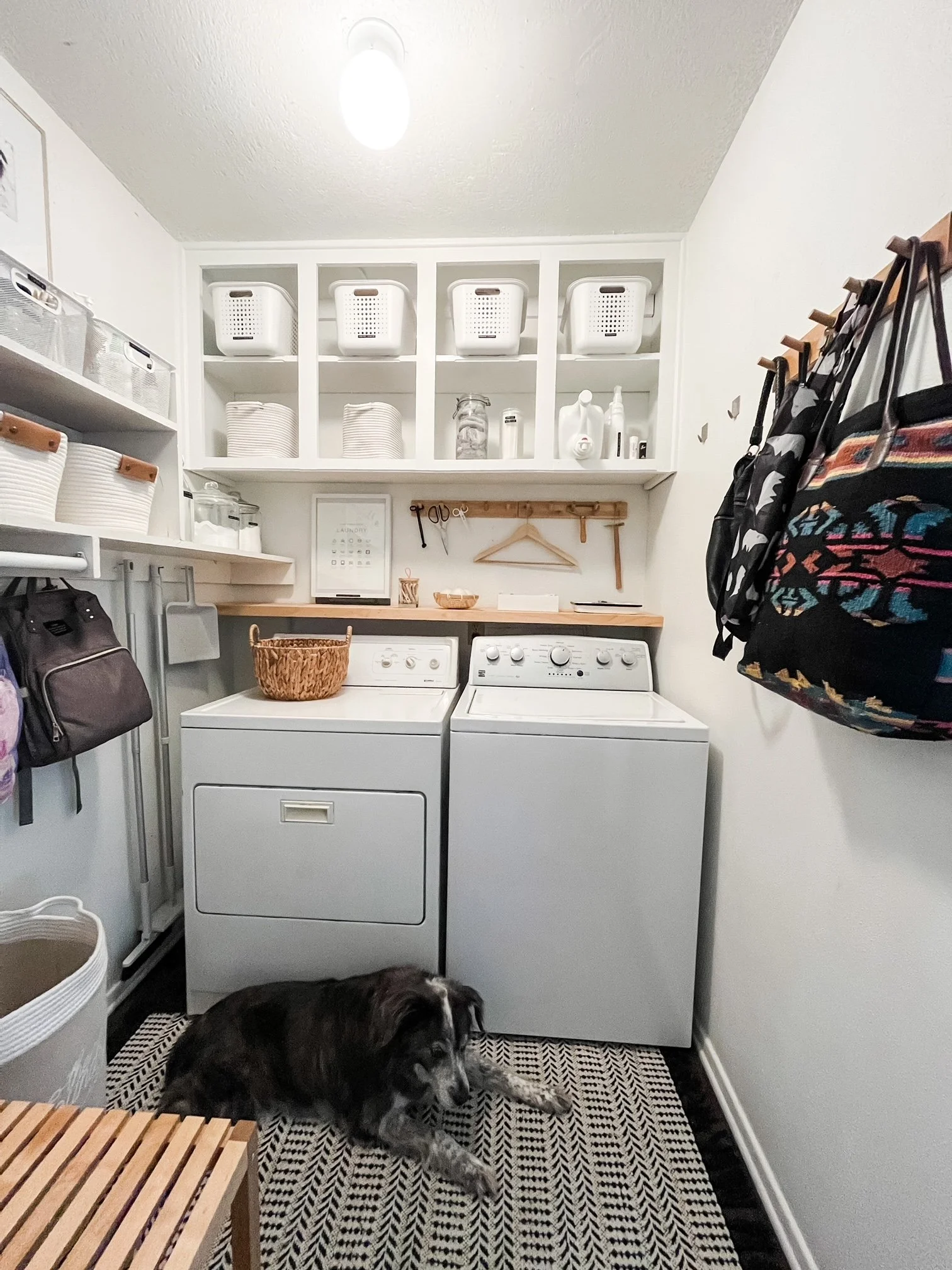
PS. Do not feel discouraged for a second looking at my laundry room/mudroom photo up there…it has been RUTHLESSLY edited and organize over the years (this is also my job!) and I can assure you that this photo makes this space appear far larger than it is in real life!

2. Create essential zones.

With your primary entryway newly edited, it’s now time to create clear zones for your essentials. Remember, your essentials are the things you MUST have for your entryway to work well, improve efficiency and streamline every action you’re doing. Try to limit any “extras” in this space and only focus on what you need to make life EASY moving in and out of your home.

Some examples zones might be: shoe storage, bag or backpack storage, seasonal clothing storage, reminders board, extra baskets or bins for store returns or library books, etc. Create whatever zones you need to make your space efficiency for all the users of the space.

We’ve spent time streamlining/editing your entryway, and now it’s time to possibly bring things in to make your space work even better. Do you need more hooks for backpacks? Do you need a smaller basket for shoe storage to encourage less options to be stored there? Do you need a place to sit to put shoes on? Do you need a pen visible to sign papers for school? Think through each step, each detail and each need and keep asking the question…”how can I make this easier”?

A few quick considerations from your resident Interior Designer here and efficiency chasers:

  • Remember who is using each item and consider the height or reach range of each user so they can easily use hooks, shelves, baskets, etc. If they can’t reach it, they won’t use it and chaos will continue.

  • Consider the weight and durability required for things like wall mounted hooks or storage shelves. Install these items in studs in your home wherever possible. Verify weight capacities on any product you install for safety and so you know how much you can store where.

  • Focus on durability and aesthetics while selecting items to finish streamlining your space. If you select pieces that won’t last, you’re wasting your money and material resources. Shoes shouldn’t be stored in white soft bins for obvious reasons. Consider items that can be easily vacuumed out or wiped down. Also, make sure you actually like each item you bring into this space. You will be looking at it everyday, several times a day. It will impact your mood and it’s worth the attention to get it just right.

  • Bonus points - select items that you could use in other areas of your home in the future! This is how the “shop your home” concept continues to come full circle with intentional buying!

3. Live with it + make changes.

There is an unfortunate misconception that once we get a space set up that it’s done for good. Sometimes we do get really close and don’t have to touch it for a while. True. But is that realistic for anything, to expect it to never change or evolve over time? Does anything in life stay exactly the same? No. I want to encourage you to have the mindset with any area of your home that somethings might need to be tweaked and a few things changed here and there. Not only is this necessary but this mindset is aligned with real life.

At this present moment, I want you to live with the changes you have just made. Give them a few test runs. Check in with all your users and see how it works for them? Were they able to put everything back where you showed them things belong? Did you need one more bin or need to remove one that is not being used? Do you need one more hook in a different location than you thought? Do your keys need to be stored in a completely different spot? Make a few intention tweaks if needed and then get back to living.

Inevitably seasons change, needs change, kids get taller, schedules shift, etc. Do a check in during the first few days of your improved space, then only sparingly after that when you detect a bit of extra chaos. No problem. Simple run through these three steps again and you’ll be good to go!

More Support for Your Home + Life:

Lots more decluttering + organizing support here to lighten the load in your home!

Ready to take action in your home? START HERE with with FREE Home Simplifying Quick Guide!

Not sure where to being + need help getting started? Check out the tools I’ve created for you HERE.


Read More
DECLUTTER, DESIGN, ORGANIZE Fuzzy Hippo Shop DECLUTTER, DESIGN, ORGANIZE Fuzzy Hippo Shop

Seasonal Shifts | How To Declutter + Design Your Way Through It

It’s an interesting time right now for most, where cooler weather (unless you’re in Miami per se) has you bustling around with a renewed sense of energy that was previously absent in those high heat months. While it is a time of year that for most of us feels like things are RAMPING UP, I’d encourage you to SLOW DOWN during this “Seasonal Shift” into Fall/Winter, as we dive into December. Look at it as a time to review a few odds + ends around your home to lighten your load as the new year approaches. The new year will thank you!

It’s an interesting time right now for most, where cooler weather (unless you’re in Miami per se) has you bustling around with a renewed sense of energy that was previously absent in those high heat months. While it is a time of year that for most of us feels like things are RAMPING UP, I’d encourage you to SLOW DOWN during this “Seasonal Shift” into Fall/Winter, as we dive into December. Look at it as a time to review a few odds + ends around your home to lighten your load as the new year approaches. The new year will thank you!

1. CATEGORY: CLOTHING

When you you start pulling out your cooler weather clothing, take a moment to assess each item + your likelihood of wearing it again.

PRO TIP: Keep a notepad handy + write down any essentials that you’re missing + need to shop for (ie. raincoat, gloves, warmer socks) —PS. I wrote that sock part as a reminder to myself! Last winter was rough…as a I tried to “create” one pair of warm socks by layering three together…yea, it’s embarrassing.

ADULTS

Review your colder weather items in categories (ie. sweaters, jackets, scarves, gloves, boots, etc.) so you can assess what you have objectively + not as one big pile. This is a time to assess if you have any duplicates that aren’t used. Give those away to someone who can use them now!

Ask yourself when’s the last time you wore the item? If you can’t remember + aren’t excited to wear it, let it go, Elsa style.

Keep your best + favorites that you’re excited to wear. Donate the rest that are in good shape + could be immediately useful in someone’s life/home.

Give these cold weather items a good wash + get rid of the dust bunnies, then fold/hang as needed so they’re easy to get to for the season.

KIDS

Look at their clothing in categories (sweaters, jackets, sweats, etc.). Depending on where you live the quantities you need to support your lifestyle + weather conditions will vary. For example, here in NTX, it’s mild but winter can still get “serious” now + then so a good heavy jacket, raincoat we can layer with + a good hat, mittens/gloves, plus warm sweaters are still essentials. But we don’t keep many multiples. Beyond that, focus on layering pieces to create or remove warmth.

Remove anything they’ve grown out of for the season or don’t wear/don’t have interest in.

Make sure these seasonal items are easy for your kids to get to encourage them to get dressed appropriately on their own. If it needs to be hung up, make sure a stool is nearby if they can’t reach it on their own. We hang up our heavy coats, then put all the “cold weather essentials” in a separate drawer down low. Our everyday pants + long sleeves are in another “everyday” drawer because it is worn frequently.

2. CATEGORY: KITCHEN/FOOD

To do a seasonal breeze through of this, only focus on the items below to lighten your load. You can do another deep dive when you have time/energy.

PRO TIP: Keep things simple by breaking things into mini tasks, like one drawer at a time, one pantry category at a time (teas, baking supplies) rather than looking at everything all together which just fuels the “overwhelm”. Put your energy in places you know need TLC (like neglected pantry shelves or drawers that you can’t shut or find anything in). These are quick win/high impact suggestions, so feel free to pick + choose from the list or do them all if you’re feeling wild!

Do a quick review of your pantry - remove old/expired foods + foods you’re not going to eat. Donate to a local food bank anything not expired or unopened.

Jot down on a notepad foods or pantry staples you’d like to restock on for your holiday/seasonal favorites.

Drawers - remove anything that never got used this year/you avoided (or you can’t remember the last time you used it). Toss broken/beyond repair items.

Cabinets - remove anything that you no longer use, is broken or you’ve fallen out of love with. Donate (or sell) anything in good, usable shape.

Fridge/Freezer - toss expired sauces, foods, frozen items, etc. Clean + recycle as much packaging as possible.

Spices - toss anything that’s old/expired (smell it to determine freshness, it should still smell like the spice or toss it) - plan to restock on your favorites.

Mug Intervention - yes I’m talking to you! I’m totally game for all the warm + cozy drinks, but you don’t need 30 mugs to do, I promise you! Pull them ALL out on the counter + only keep your absolutely FAVORITES. The chipped ones need to go. Donate the extras in good shape. Phew! Don’t we all feel better now?!

3. CATEGORY: SEASONAL DECOR

NOW I probably have your attention! Are you ready to tame the seasonal decor chaos? OK, here we go!

PRO TIP: There is this unnecessary, ridiculous pressure each holiday season to buy new decor for your home. What’s the deal with this? Can we just kick this to the curb once + for all? I am here to liberate you. If you need to make a swap or bring something new in, something should be headed out the door as well. Keep reading for more tips on this below.

As you pull out a box/bag/container of seasonal decor items, you’re going to objectively look at each item to decide if you’re going to keep it. PS. Your taste is likely going to change over time + that’s OK! Part with things you fall out of love with + make peace with it!

Declutter as you decorate. Yes! It’s groundbreaking concept, join me! It’s great! I often sort as I open containers + keep a brown paper bag or box handy to add ornaments, knickknacks, art, garlands, seasonal platters, cups, etc. When you have it in your hands if you LOVE IT + you IMMEDIATELY know where it can be displayed/put out, KEEP IT. Once you’ve done a thorough editing on these items (+ have honed your personal style a bit more), there’s less + less to edit each year. Phew!

Be incredibly mindful of what you BRING IN this season. It’s OK to love what you already have + not buy new. It is also OK to make some intentional swaps if there’s something you’re missing + want to add. But don’t bring in more than you need or will use. It is more to manage + store ALL YEAR LONG.

4. CATEGORY: EXTRAS

This category is really for the non-essentials in our life that do make life more enjoyable when we have boundaries for them. Let me enlighten you…

PRO TIP: If you have items you’re donating, plan to donate your items that week. Schedule it into your time + get it done!

Pick one or as many of these “extras” to go through at your leisure: kids toys, magazines, books, decor, throw blankets, writing utensils, candles, lotions, soaps, teas, coffees, etc.

Now pick an “extra” + review it by zone (by shelf, drawer, etc.) or do a full group (pull all your magazines together on the table to review). Keep only what you LOVE + USE + ENJOY NOW. The rest needs to go.

Kids Toys - only KEEP the following: items they use/play with regularly, are developmentally appropriate, aren’t broken/damaged, are worth the space they take up in the home + it doesn’t interfere with valuable open/play space for them. Open space will always be more valuable than any single toy that exists on the planet. Let that sink in.

Some of these “extras” may need to be tossed if opened, expired, etc. Donate or giveaway anything in good shape. Recycle/donate sell books + magazines. Donate decor items you’ve fallen out of love with but are still in good shape + could be useful in someone else’s home.

SO WHAT’S NEXT?

It’s time to enjoy the space you’ve just freed up throughout your home! Yes!! These are all ideas on where to start + by no means do you need to do all of them unless you’d like! I know you’ll love the results when you’re done.

If you’re needing help with more decluttering + you’d like more support from me, feel free to check out all of these mini course still available discounted through the end the year. Here’s the line up:

Clothing Closet Declutter Guide

Declutter Guide For Kids

Organization + Style Guide

Please feel free to DM me on Instagram / email me with any questions while you’re working through these mini courses. I am more than happy to help + keep you moving + encouraged!

And don’t forget, enrollment for the Declutter Your Home Masterclass will be open for enrollment again early next year! If you want to learn more about this holistic, deep dive into learning how to declutter + learn all of the skills you’ll ever need to declutter your home + life for good, click HERE. If you want to know the moment it is live again in 2022, make sure you’re signed up for EMAILS (light on your inbox + you’ll get a bonus low cost organizing guide too just for signing up!).

Thanks for being here.


Read More
DECLUTTER, ORGANIZE Fuzzy Hippo Shop DECLUTTER, ORGANIZE Fuzzy Hippo Shop

Declutter + Organize Without Making A Huge Mess

If the fear of making a huge mess often scares you away from decluttering + organizing, please keep reading! We’re going to talk about both the mess + the overwhelm of larger projects, or projects that might take more time to knock out. Solutions do exist for all of this, I promise!

If the fear of making a huge mess often scares you away from decluttering + organizing, please keep reading!

We’re going to talk about both the mess + the overwhelm of larger projects, or projects that might take more time to knock out. Solutions do exist for all of this, I promise!

We started this discussion last week in our EOW Chat (end of week) that I post on Instagram stories typically on Friday or Saturday each week. When This conversation was initiated by several of you reaching out to me over the course of many months, sharing your own concerns + stories, so I thought this topic deserved a deeper look. Let’s get to it!

Many of you (and myself included) said that there are often times when you KNOW there is an area your home that needs attention - whether it be decluttering, organizing, or both - BUT you never get started out of FEAR of making a big mess during the process. This fear stops you in your tracks.

This fear you’ve expressed to me, and that I am very familiar with, comes from various layers worth mentioning. See if any of these thoughts resonate with you:

  • When I get started decluttering or organizing, it spreads out and takes over my whole house!

  • Decluttering makes more of a mess than what I had to start with!

  • I don’t have enough space in my home to start decluttering.

  • My kids will get into everything I’m trying to sort through.

  • I don’t have enough time to declutter an area and get it pulled back together quick enough.

  • I’m not going to be able to use this space for my day-to-day if I start decluttering here.

I hear you. I do. Now let’s start talking about solutions.

Create a Plan + Timeframe

Without a plan you will lose focus. Let’s say you want to tackle a space this month. Great. Right it down on paper, on the refrigerator, in your phone, add to your google docs/schedule, whatever works best for you. After you have your timeframe in place, it’s time to dive into some practical strategies to make your decluttering/organizing actually happen.

Assess Your Space

Take a moment to get clear on the area you’re wanting to work on decluttering/organizing. Is it a closet? It it an entire room? It is one part of a space? Get clear on what it is you want to get through. Now look at this space objectively - what is it made up of? Shelves, drawers, furniture, bins, piles, containers? Learning to look at your space IN PIECES is a great tool to help you more easily break your space up into MINI ZONES. These mini zones make the decluttering/organizing task more manageable. Now go get your donation/giveaway + keep boxes ready! Let’s keep going!

IMG_7811.JPG

Avoid A Massive Mess

First, I’m going to be candid with you, there will be some mess. That is actually an indication that progress is happening! But here’s how to not let it get totally out of control and take over your home. Once you’re seeing your space in MINI ZONES, decide where you want to start. If you feel like you can’t work in that particular space to get the decluttering done, go grab a box/bag/container and fill it with the items from one or more of the MINI ZONES in your space (ex. empty out one full drawer or shelf into your box). Then take it out of the room to go through in a low traffic space - like the top of your washing machine, a low use counter top, the garage, on a bed in the spare bedroom - somewhere out of your high use spaces so you can keep moving + living.

You can also apply this to CATEGORIES you see in your space - remove all the books and put them in a box to go through - finish that category then move on to the next category until you’ve chipped away at your entire space. Or let’s say you want to get through your entire closet this month with limited time/space. Go through 1 category each night and put things back each night so there’s not a clothing explosion all over your room for weeks on end! Decluttering/organizing by MINI ZONES or BY CATEGORY will also help you manage your time and not get so overwhelmed by the process. It also lends itself perfectly to not having large, continuous chunks of time to do the work.

What To Ask Yourself

✓ Is it bringing value to myself/home/family?

✓ Do I/we use it?

✓ Do I actually like to look at this item?

✓ Does it support my current + future life goals?

✓ Would I buy it full price in the store today?

Be objective, be honest, stay focused on creating space for what you love + value + is essential to your life/home day to day.


Restore Order

While you’re going through your space, you can choose to put things back gradually or all at once once decluttering is completed. Your most effective organizing will happen once you see all of your KEEP items together, to make better sense of them as a group. Also consider if these KEEP items should go back where you found them, or be more helpful + efficient in another location. Sometimes decluttering in a different space than where you found the item is highly beneficial, as it often helps you separate yourself and the item from its’ old, often stagnate home. It can be easier to assess the value of something in a neutral location more objectively.

baskets.jpg

Parting Ways

As those donation bags or boxes are filling up, even if you are in the middle of your decluttering in that space, I encourage you to remove them from your home as quickly as possible. Divert as much from landfills as possible. Set up a scheduled pick up time, give the items away to a friend, drop off at a local charity, shelter or donation site as soon as you are able to. Make sure to remove the items you’re parting with from the space you’re working on immediately. This will help you more quickly see your progress and not let you get hung up on indecision. Honor your instincts and decisions. If you’d like to sell some items, give yourself a timeframe, and create a donation or giveaway back up plan if your items don’t sell. Keep your eyes + actions focused on looking forward (not back)!

For more decluttering + organizing resources see these guides:

Declutter Your Home Masterclass (doors close 2/5)!

Clothing Closet Declutter Guide

Declutter Guide for Kids + All the Things!

Organization + Style Guide

Note: Clothing Closet Declutter Guide, Declutter Guide for Kids, and the Organization + Style Guide are ALL included in the bonus section of the Declutter Your Home Masterclass.

Read More